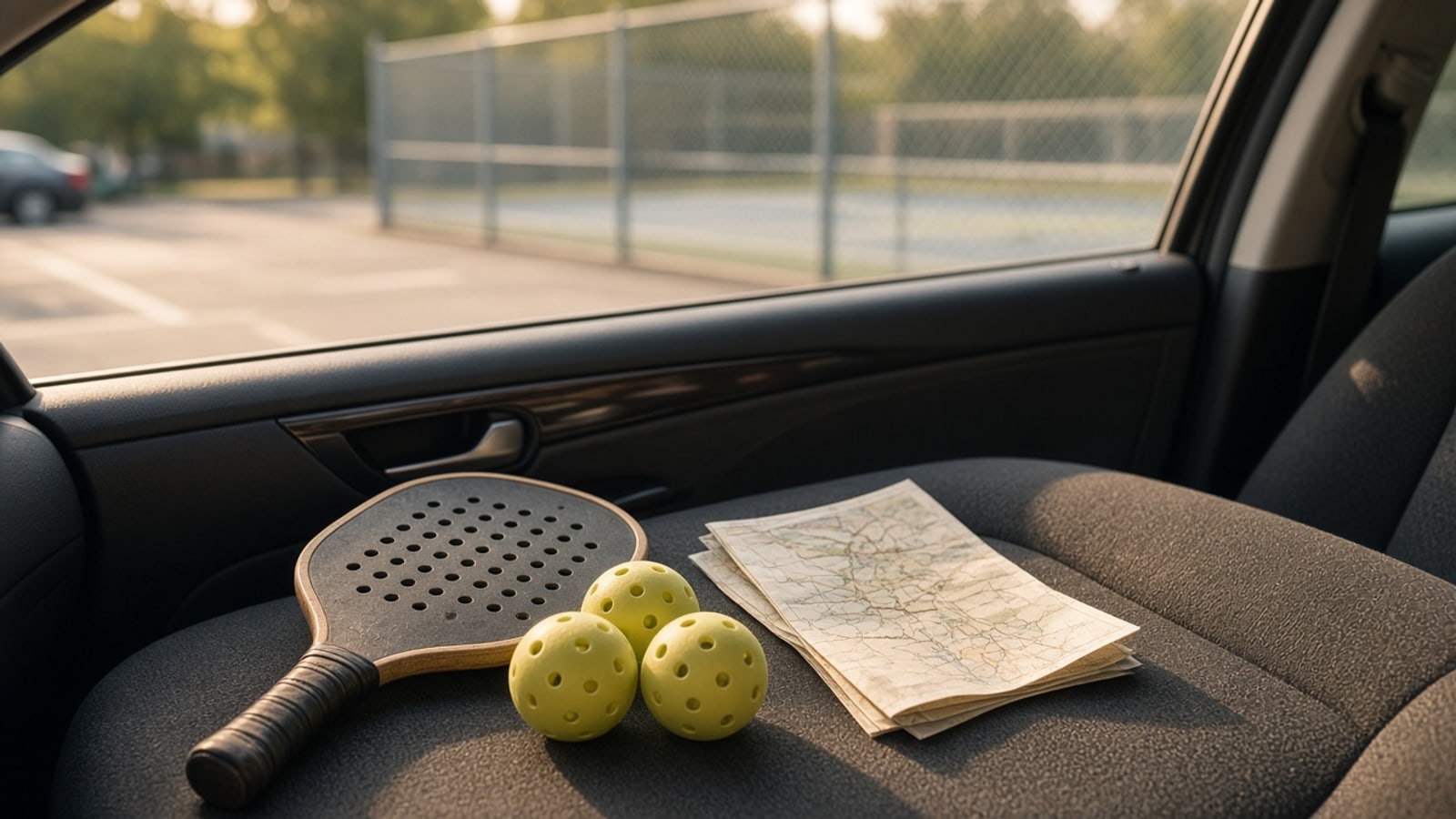
The brochure said pickleball. It had a photo of a smiling couple in white, a paddle in one hand and a drink in the other, and a caption about an active vacation. My rule now is never unpack before five questions. That afternoon I had a paddle, an hour before dinner, and no questions at all, so I changed shoes and found the court.
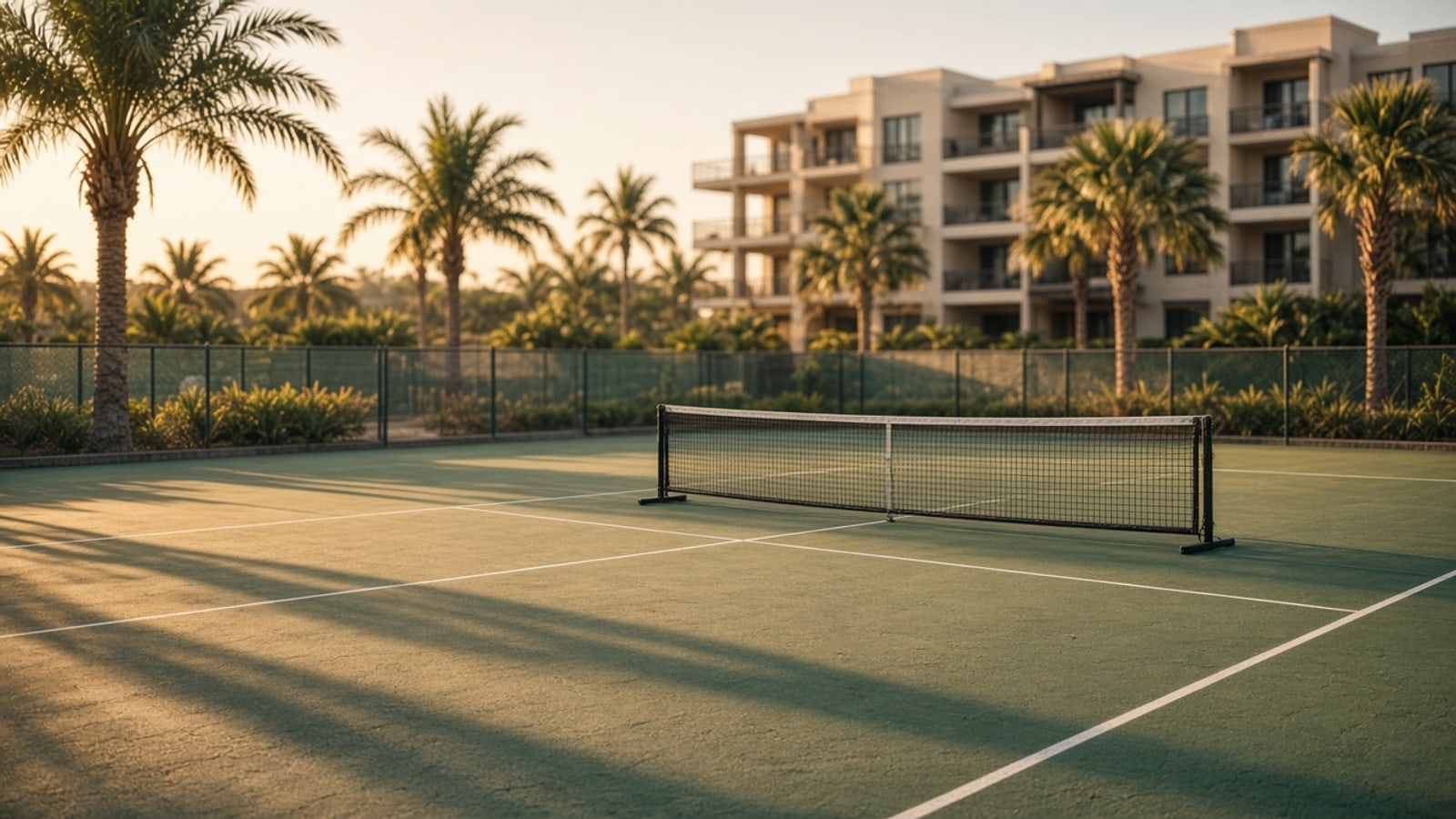
It was a tennis court with one line taped across it at an angle that did not match any court I had ever seen. The net was on wheels and sagged in the middle. A sign on a post said pickleball 7 to 9 a.m. and 4 to 6 p.m., court time by reservation, wristbands at the front desk, and a deposit for the net. It was 4:40. I had missed the open window by twenty minutes and the desk had already given the wristband to someone else.
I unpacked my paddle for nothing. I would like to say that was the last time. It was not.
The brochure is not lying, exactly
Hotels are not trying to deceive anyone, and that is what makes the hotel court so frustrating. Pickleball is popular, guests ask for it, and a hotel with a tennis court can tape a line and buy a net for a reasonable amount and put pickleball on the amenity list. That is a real thing they offer. It is just not the thing I imagined when I read the word.
A dedicated court has painted lines, a permanent net, a flat surface, and a schedule that lets guests play without a reservation. A converted court has some of those things and usually the worst version of the others. The taped line is the tell. So is the wheeled net. So is a schedule with narrow windows, because the tennis players had the court first and the pickleball players get what is left.
None of that makes the hotel dishonest. It makes the brochure incomplete, and it means the traveler has to do the checking.
The five questions
I call the front desk now, before I book, and I ask five questions. It takes three minutes and it has saved me more than one wasted afternoon.
One, what is the surface? Painted asphalt or a proper court is a good answer. A tennis court with a line taped across it is an answer that tells me to plan around it.
Two, are the lines painted or taped? Painted lines mean somebody committed to the game. Taped lines mean somebody is trying it out.
Three, is the net permanent or wheeled? A permanent net usually comes with a court that was built for the sport. A wheeled net means the court goes back to being something else at five o'clock.
Four, what are the hours and is a reservation required? If the answer involves a wristband, a deposit, or a two-hour window, I ask whether there is a public court within a few miles. There almost always is.
Five, do you have paddles and balls, and how many? A hotel with four paddles for a hundred rooms is offering a photo opportunity, not a game.
I ask those five questions because the alternative is the tennis court with the taped line, and because I have been that person in the parking lot with a bag over my shoulder. It is a small humiliation and it is completely avoidable.
What a hotel court is actually for
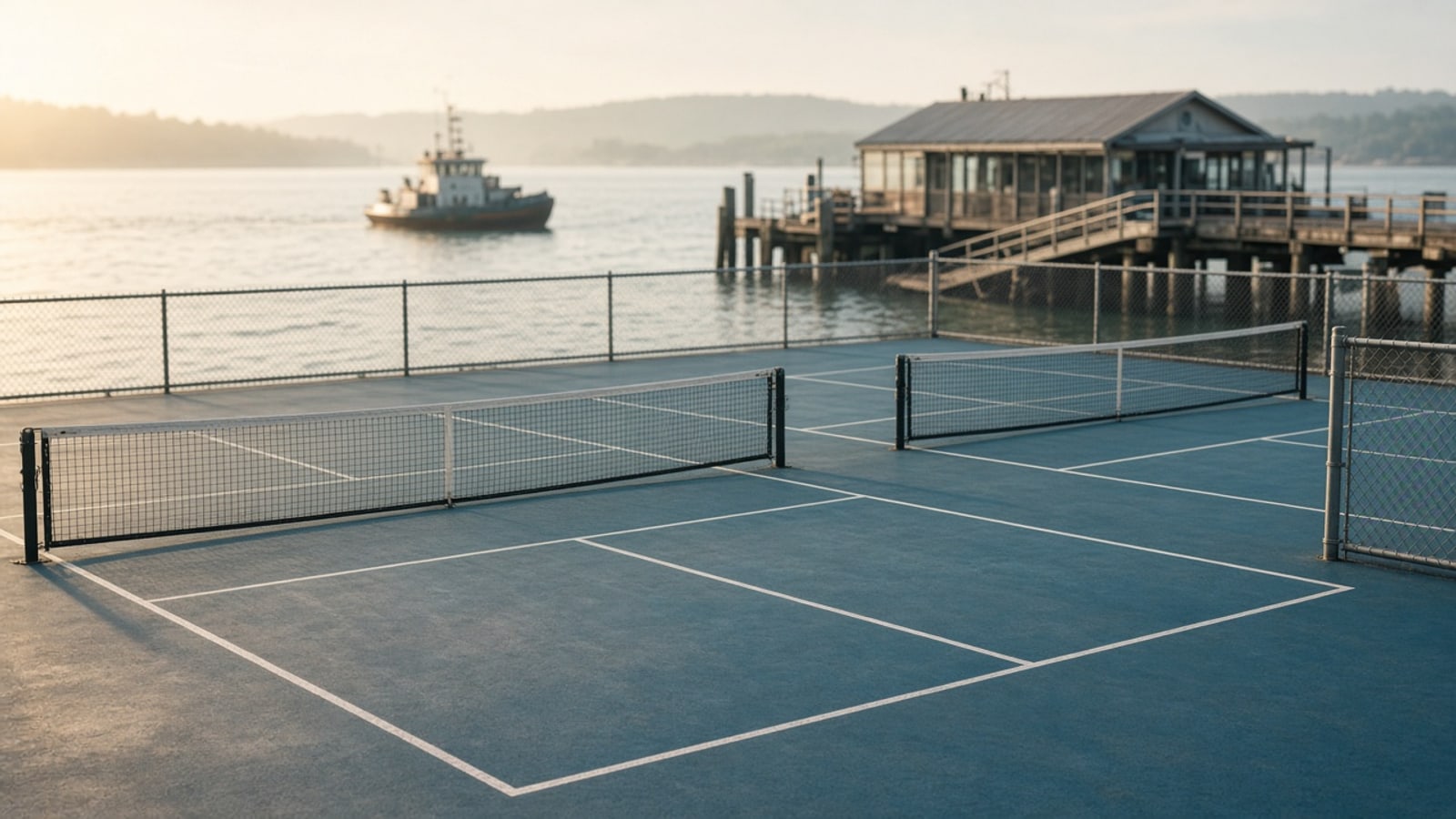
I have found two good hotel courts in ten years. Both were at properties that had a real, permanent court with painted lines, a net that stayed up, and no reservation system. One had a group of guests who played every morning at seven and welcomed anyone who showed up. That court was the best part of the trip, and it reminded me of the best court I have found anywhere, the one next to a ferry terminal, where the people made the court and the surface did not matter. The people always matter more than the paint.
The other good hotel court was attached to a conference center and was empty, which sounds like a failure and was not. I hit serves for forty minutes, worked on my drop, and had a perfectly pleasant time by myself. A court does not have to produce a game to be worth the shoes.
So the hotel court is not useless. It is a coin flip, and you should decide whether the coin flip is worth packing around.
The municipal park twelve minutes away
Here is what I do now. When I get to a hotel, I ask the desk where the nearest public courts are, and then I ignore the hotel court unless the answer is bad.
Public parks have real courts, regulars, and an open-play culture that does not depend on a wristband. The one near the last hotel was twelve minutes away, six courts, a water fountain, a shade structure, and an eight o'clock group that had been playing together for a decade. I played three games, learned the name of a dog, and got a recommendation for a diner that made the whole trip. The desk at the hotel had never heard of it.
If you are not sure how to walk into a public game, the method is in how to get a game in a town you have never played. The short version: show up early, bring balls, ask at the fence, and let them place you. It works in towns of every size, and it works better than any resort amenity.
What I pack now
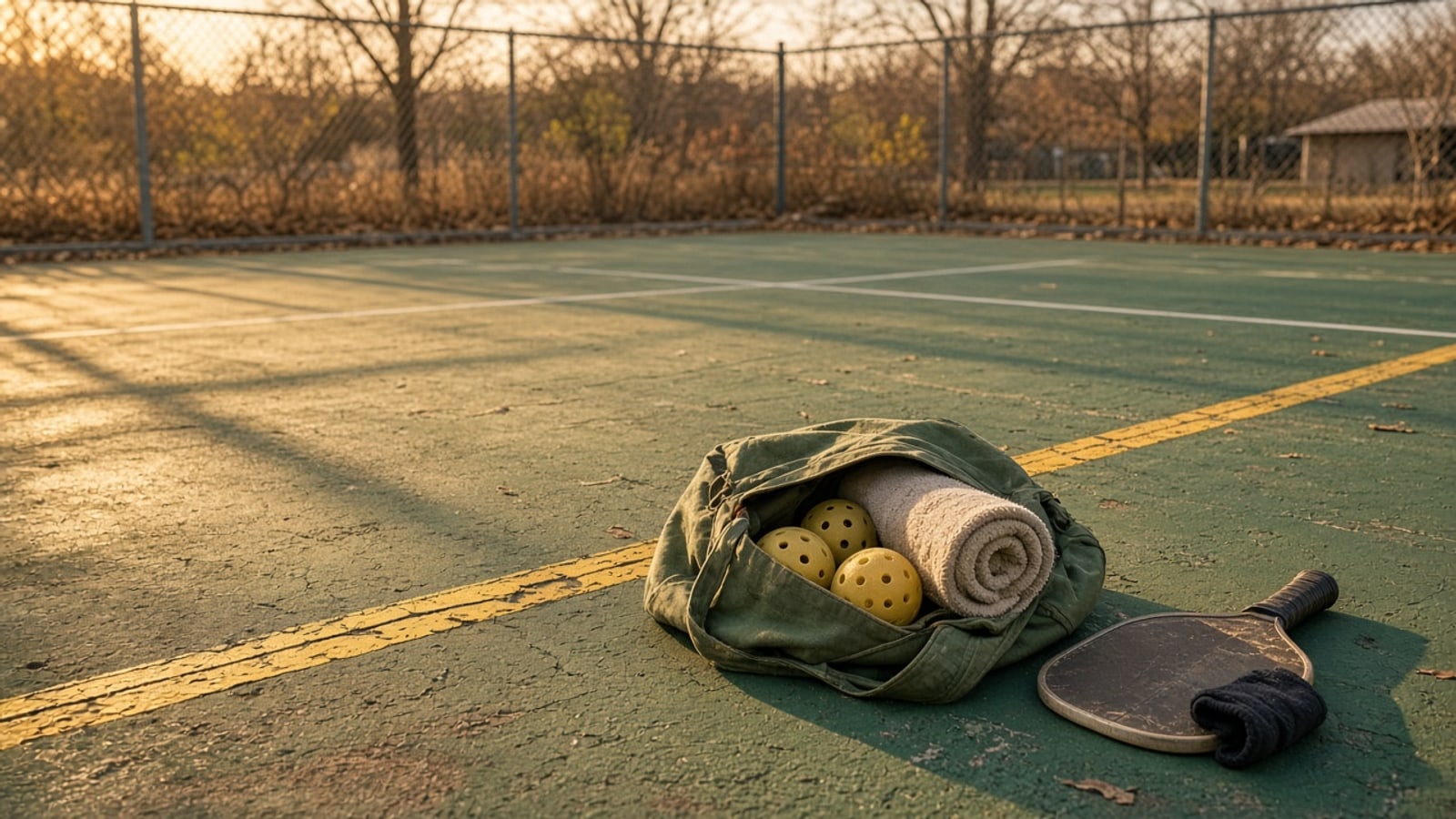
My travel bag has not changed much since 2016. A paddle in a case, three balls, a water bottle, shoes with grip, a hat, a small towel, and a first-aid kit with a few bandages and a blister pad. Joe carries the sunscreen and the snacks. The bag weighs less than my purse did when I was flying.
The one thing I added after the taped-line summer is a phone number for the local parks department, saved before I leave. I do not trust the brochure and I do not trust the internet listing that says "pickleball nearby" without a surface, lines, or hours. I trust the person who answers the phone at the parks office, because that person knows whether the nets are up.
If the hotel court turns out to be real, wonderful. If it turns out to be a taped line and a wheeled net, I have already found the park, and I am not standing in a parking lot with a bag over my shoulder again.