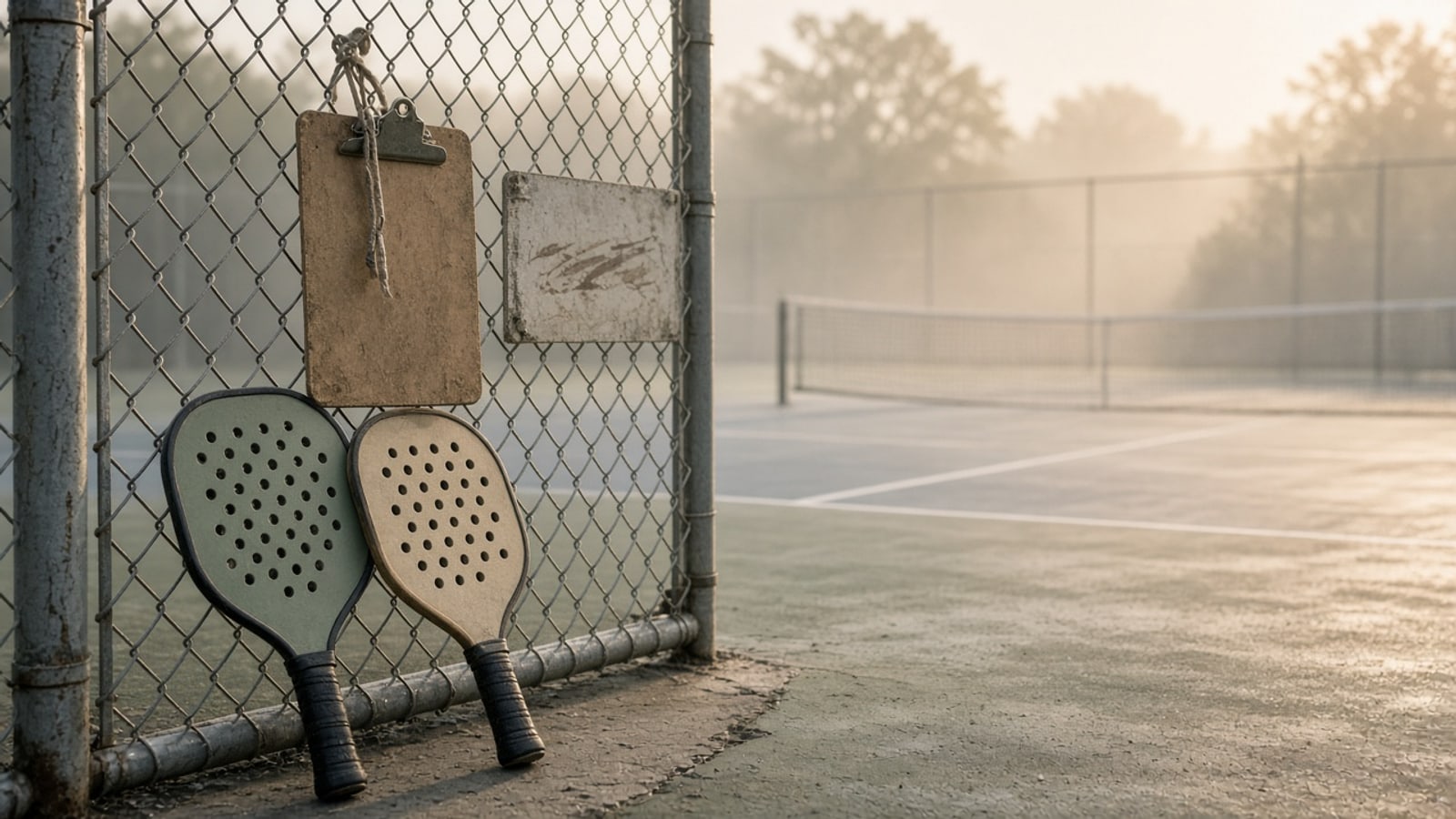
The courts in that little town were behind the fairgrounds, four of them, cracked in a way that made the ball hop, with a hand-painted sign that said open play at eight. I was there at 8:10, which is how I learned that in a town of four thousand people, open play means when the guy with the key arrives. He showed up at 8:25 with a thermos and a clipboard. By 8:40 I had a partner and a game, and by ten I knew where to get the best breakfast within walking distance.
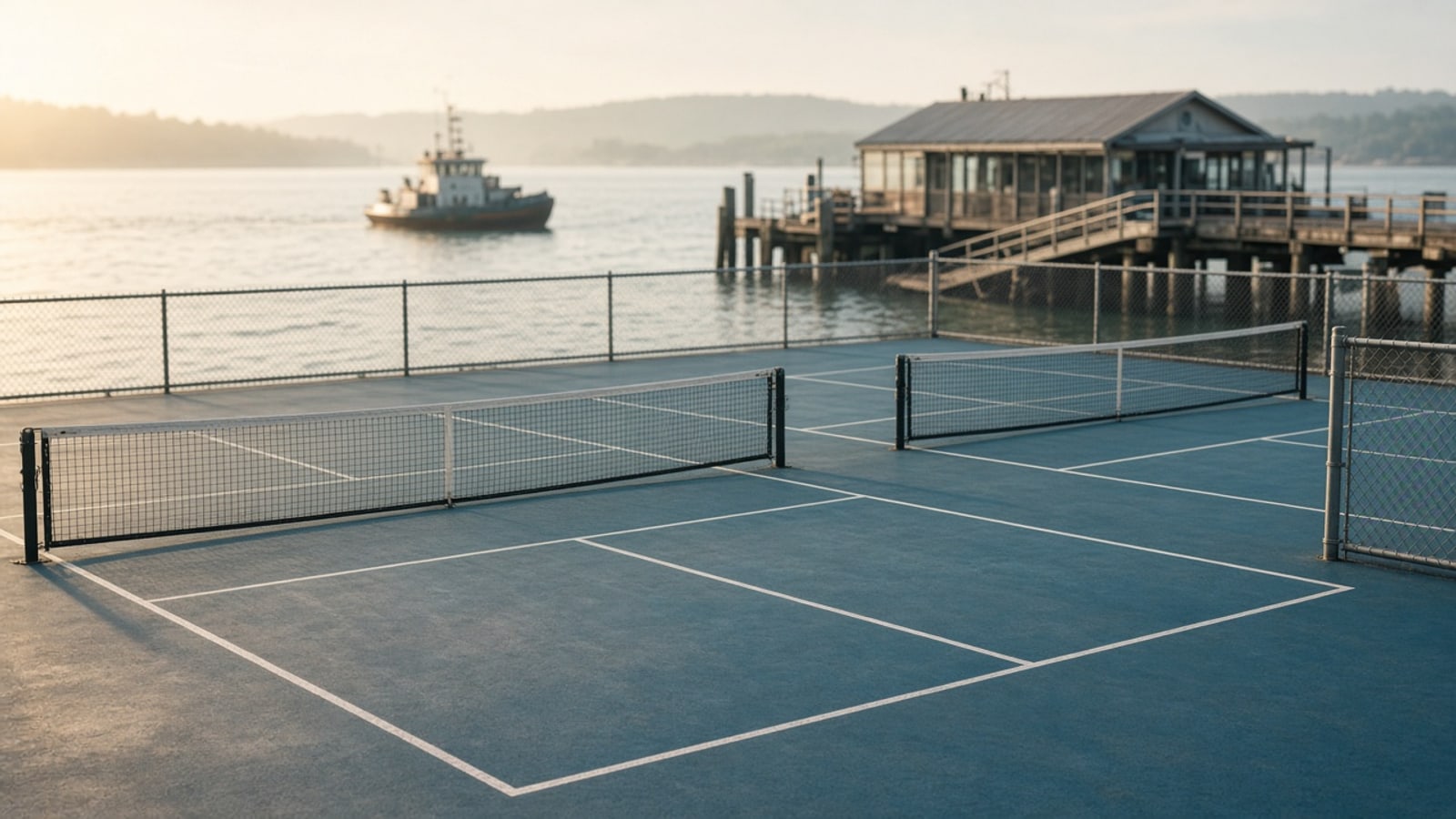
I have found a game in a ferry terminal, a resort with a wristband policy, and a municipal park where the regulars had been playing together since 2019. The method is the same every time, and it does not start with an app.
Call the parks department, not the internet
Apps and court maps will tell you where the painted lines are. They will not tell you when the regulars arrive, whether the 8 a.m. group is a league, or whether the third court is reserved for the Tuesday ladies' group until ten.
The person answering the phone at parks and recreation knows all of it. Call, say you are visiting for a few days and play recreationally, and ask two questions: which courts have open play, and what time do people actually show up. Ask what time they arrive, not what time the sign says. The gap between those two numbers is the town's entire personality.
Show up early, alone, with three balls
Thirty minutes before the posted start is not too early. It is exactly early enough to be a person rather than an interruption.
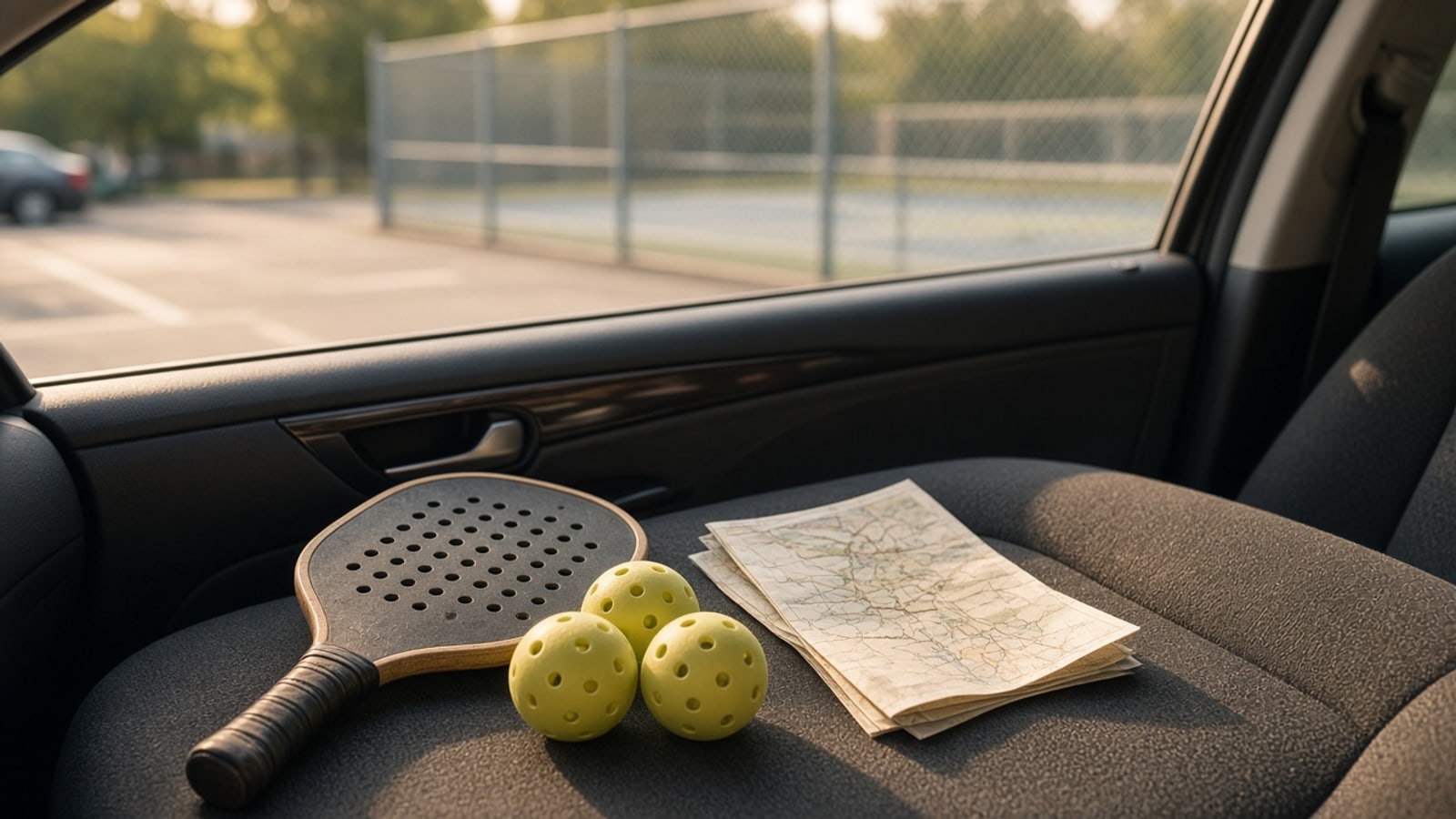
Bring three balls. Bring a paddle. Do not assume the group has loaners, and do not assume the hotel court has balls, because it will have a net and nothing else. When you arrive, find the clipboard, the sign-up sheet, or the cooler, and ask the person standing nearest to it how the rotation works. That question is the whole introduction. It tells them you understand this is their group and you are not here to reorganize it.
Read the room in five minutes
Before you ask for a game, watch. Five minutes of watching tells you almost everything.
| What you see | What it means | What to do |
|---|---|---|
| A clipboard with names in order | There is a rotation and it is respected | Put your name at the bottom, ask when you are up |
| Nobody writing anything down | It is informal, winners stay on | Wait to be invited, do not assume |
| A group warming up together | Regulars with a routine | Stand near the bench, say hello, do not interrupt the warm-up |
| A single court with two nets set up | Someone organized this | Find the organizer before you unpack |
The water cooler matters too. In most towns, the cooler is the club's social center, and the person filling it is the person who knows who is short a fourth.
What to bring, and what to leave
The bag I take on the road has two paddles, three balls, a towel, a hat, water, and a small first-aid kit. That is it. It fits under an airplane seat and in the trunk of a rental car.
Leave the coaching at home. Nobody at a strange court wants your advice on their third shot. They want a good game and a partner who calls the score clearly. If you play well, they will ask you back, and the invitation will be worth more than the advice.
One more thing. Obey the local court rules even when they seem odd. If the group plays winner-stays-on, play winner-stays-on. If the group rotates every four games, rotate every four games. You are a guest for the first hour, and the fastest way to get invited back is to be easy to organize.
If there is no open play
Some towns have courts and no organized game. That is not a dead end, it is a different phone call.
Call the parks office back and ask whether there is a league, a clinic, or a club that rents the courts on a set night. Most towns have one of the three, even when the sign at the court says nothing. Ask the person at the front desk of the local rec center, not just the parks line; in small towns those are often two different people who know two different groups.
Then ask a pro shop or a sporting goods counter. Anyone who sells paddles in a town of five thousand people knows who plays and when, and they are usually happy to tell you. The same goes for a hotel front desk if the hotel has courts: ask when the locals come, not when the guests do.
If all of that fails, go to the court at eight on a Saturday and wait with a paddle in your hand. Someone will show up. In my experience the longest wait has been forty minutes, and the person who showed up was the one with the key.
The notebook rule
I keep a notebook of courts. Surface, shade, restrooms, parking, and the name of the breakfast place the regulars go to. It is a small book, and it has become the most useful travel document I own.
The entries are not reviews. They are notes: "cracked surface, ball hops, arrive 8:15, organizer named Cliff, best coffee two blocks east." Ten years from now that will be more useful than a list of the ten best pickleball resorts, because it will be about a place where I can actually get a game.
If you are visiting a club for the first time, the social rules matter more than the surface. My friend Dottie wrote about how a club should treat a new couple, which is worth reading from the other side. And Ray's piece on the sign-up sheet explains why the clipboard is the most important piece of equipment on the court.