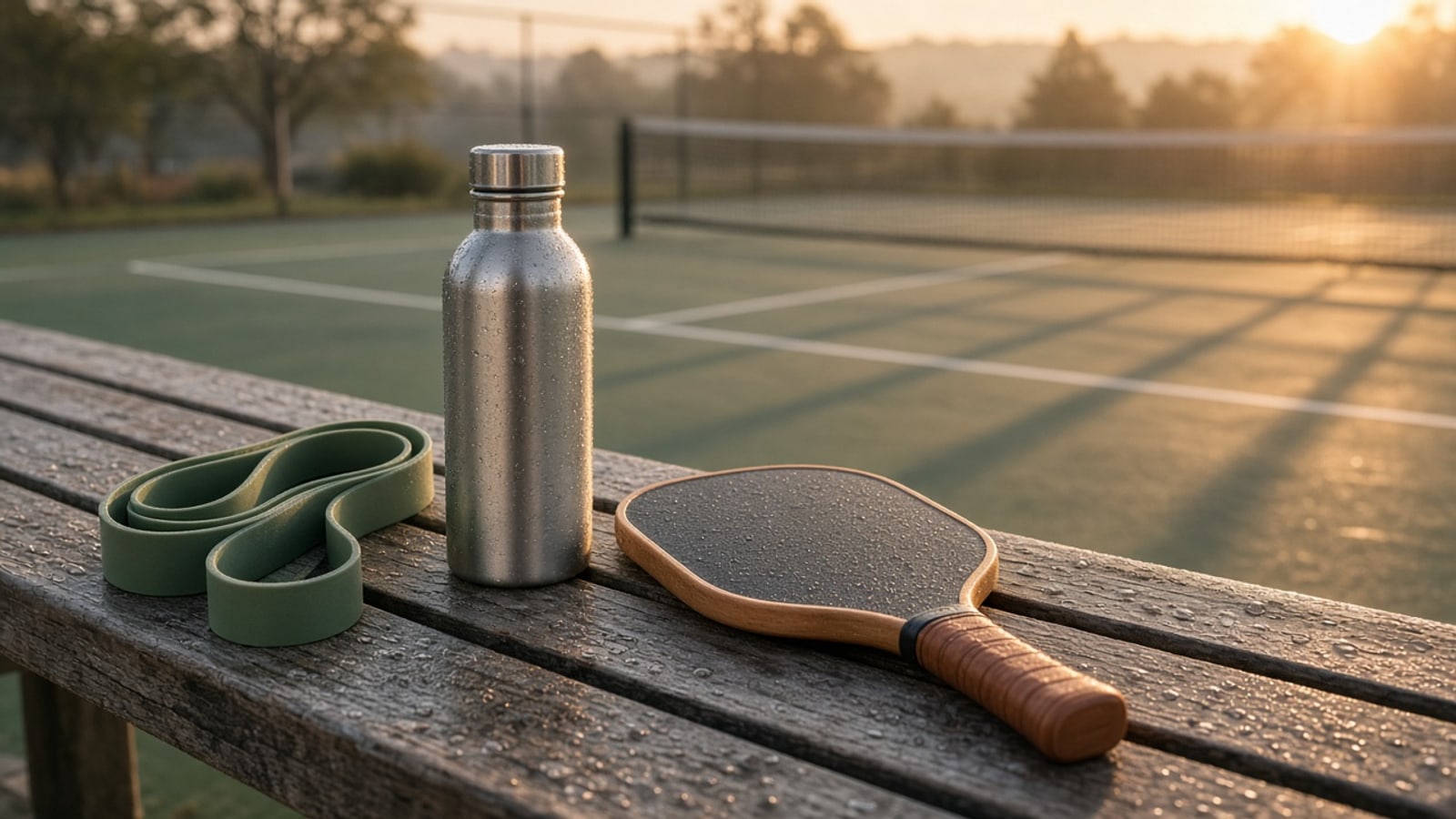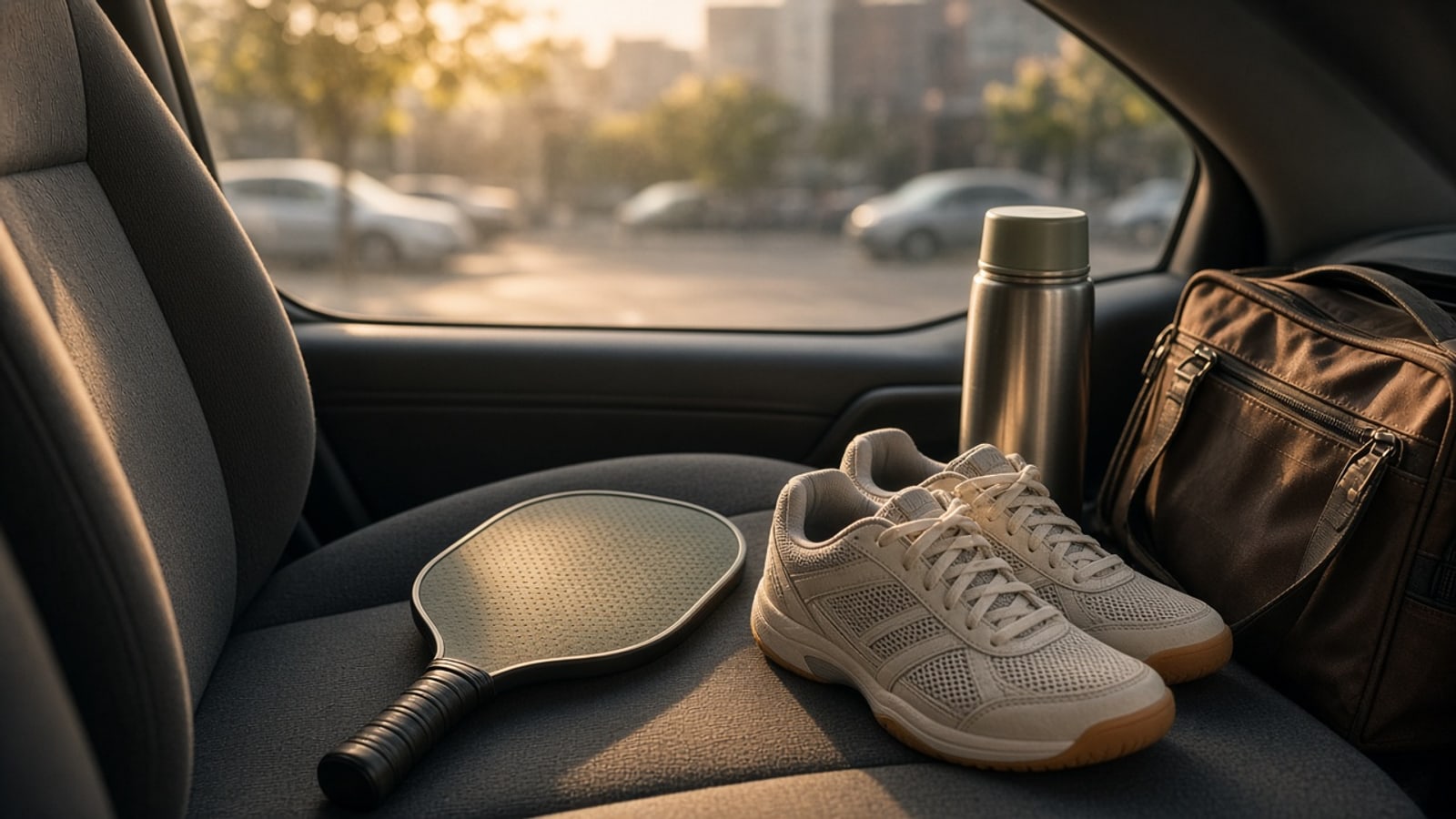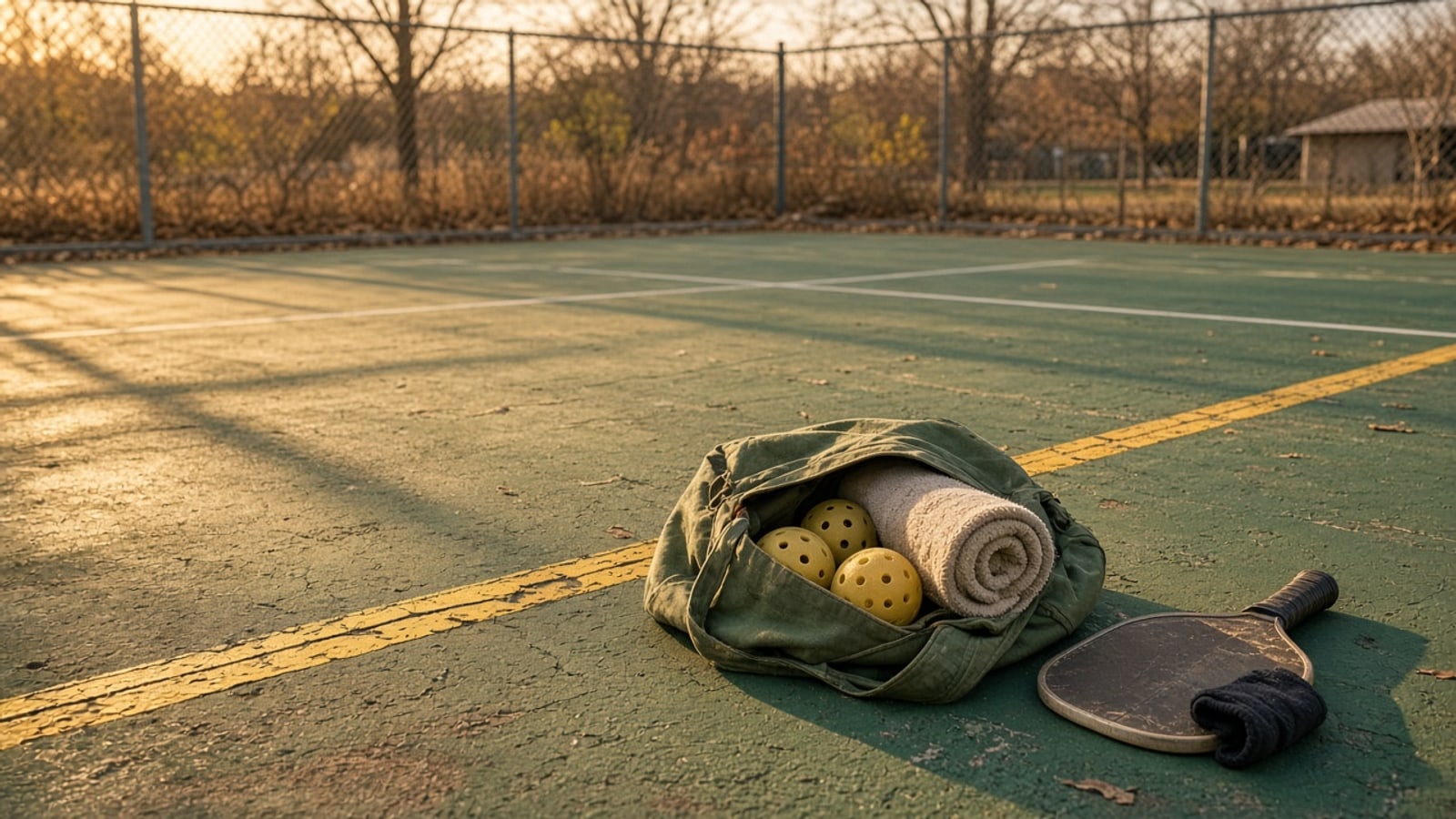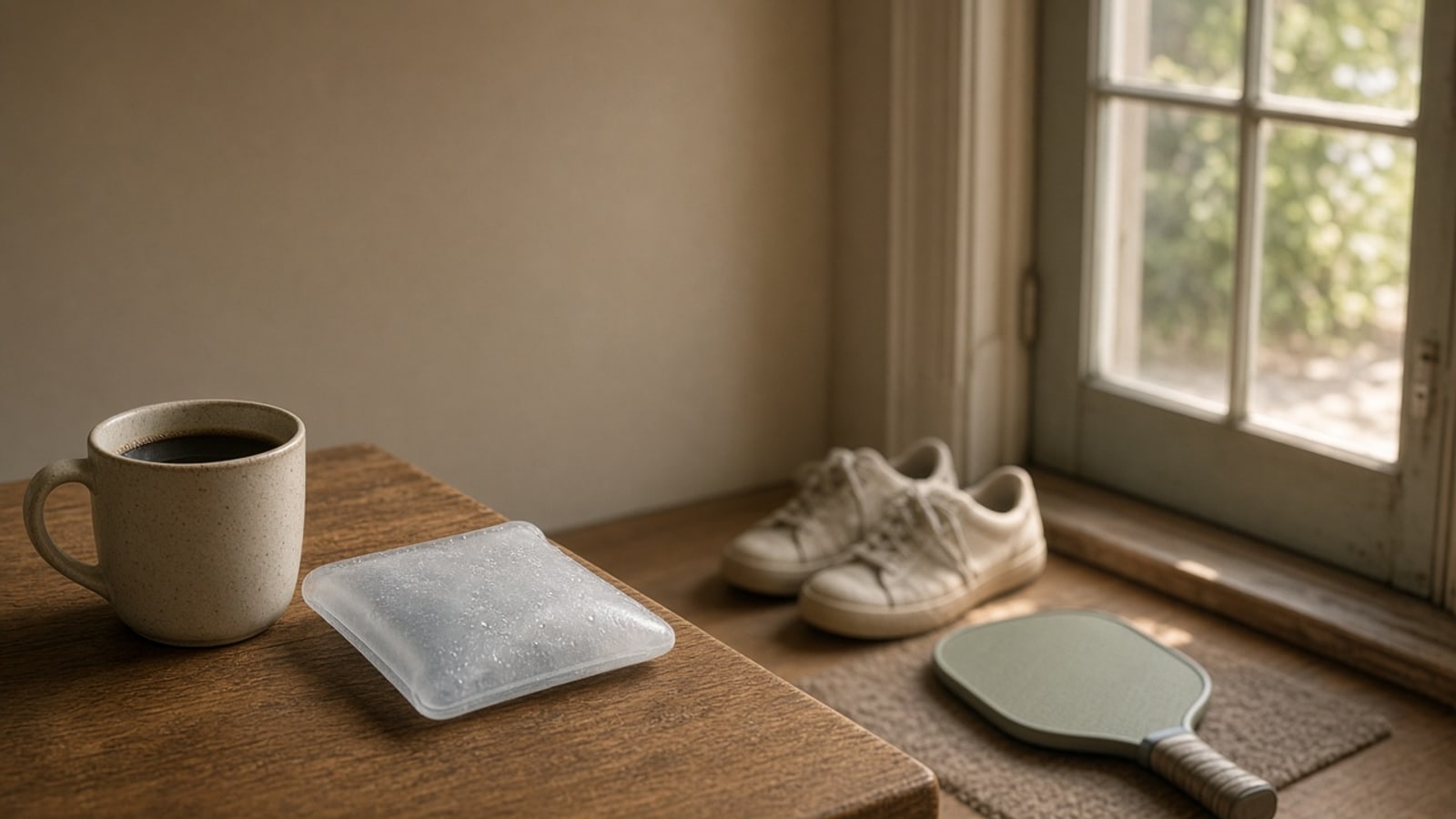
Saturday was three hours and five games at the Balboa Park courts, which is more than I usually play and about an hour more than my knees prefer. Sunday at 7:10 in the morning I stood at the bottom of the stairs in my house and did the calculation every player over fifty does. Left foot up, right foot up, no sharp spot, no catching, just the general stiffness of a body that had used itself well the day before. I went up. That is the test I use now, and it has kept me out of the kind of trouble I used to get into.
I spent twenty-seven years on a fire crew, and the lesson that stuck was not about courage. It was about maintenance. A body will answer the bell when you call it. It will also send you a bill, and the bill does not come that day. It comes the morning after.
Here is what I do now after a long session, and what I stopped doing.
The stair test
Before I decide anything about the day, I walk up and down the stairs slowly and pay attention. Not to whether I am sore. To how the soreness behaves. Is it a broad ache in the muscles, or a single point in a joint? Does it ease as I move, or does it sharpen? Is it worse than it was five minutes ago, or better?
That is my whole diagnostic, and it is not a medical one. I am a retired firefighter with two scoped knees, not a clinician, and I want to be clear about that. But I have learned the difference between a knee that is complaining and a knee that is talking, and the stair test tells me which one I am dealing with before I make a decision I will regret.
A broad ache that gets better as I move is sore. Sore gets a walk. A sharp point, a catch, a joint that is worse on the second morning, that gets rest and, if it keeps talking, a professional opinion. I have made the other choice before. It cost me six weeks.
The first thirty minutes
The mistake I made for years was sitting down. After a long session I would come home, eat, sit in the chair, and wait to feel better. I did not feel better. I felt stiffer by the hour and then I slept badly.
Now the first thirty minutes after a long session look like this. Water before coffee, because I am already behind on fluid from three hours in the sun. Ten minutes of easy walking, either around the block or on the sidewalk outside the courts with the bag still in the car. Something with protein, even if it is just eggs or a yogurt, because the body is going to do repair work whether I feed it or not. Then a shower and a normal day, not a day on the couch.
The walk matters more than people think. It is not exercise. It is circulation. A body that moves gently after a load recovers the ordinary way, and the stiffness that turns into a bad Monday is usually the stiffness of a person who sat still.
The frozen bottle, and what ice is for
I keep a small cooler with a frozen water bottle for my knee after long sessions. I put it on for ten to fifteen minutes, wrapped in a towel, usually while I am eating. I do not have a strong theory about it. It makes the knee feel better, it costs nothing, and it is the same bottle I drink from on the way home, which is the kind of efficiency I appreciate.
What I stopped doing was treating ice as a solution. Ice is comfort. It does not repair anything, and it does not mean the session was fine. If I need ice after every single session, the problem is not the ice. It is the load.
Heat, for me, is for the evening, not the morning. A warm shower in the evening and a few minutes of easy movement before bed does more for the next morning than a heating pad on a knee that is already unhappy. That is my experience with my knees, not a rule for yours.
The log
I keep a two-line log on my phone. Sleep, on a scale of one to ten. Soreness, on a scale of one to ten, at the same time each morning. That is it. It takes fifteen seconds.
The log is how I found the pattern. My bad mornings were not the mornings after the hardest sessions. They were the mornings after the third session in three days, which was usually a Friday, which is the group of retired first responders I play with. I love that group. It was also the group I was most likely to play through something for, because the whole point of the group is that nobody complains.
The log does not care about the group. It said what I already suspected and did not want to admit. The hour before a session matters too, and Grace Okafor wrote about her version of that in the hour between work and the court. Now Friday is in the plan with a lighter Sunday, or Friday is a walk if the week has been heavy. The log made the tradeoff visible, and visible tradeoffs are easier to make.
The 48-hour rule
Three hours of pickleball is a loan. The next 48 hours are the payment, and I plan for both.
The day after a long session is a walk, not a match. The day after that, I decide based on the stair test and the log. If the soreness is ordinary and easing, I play. If it is not, I take another day. That is the rule, and it is not discipline. It is negotiation with two knees that I need for the next twenty years.
Elena, who retired as a paramedic and has seen more damage than I have, has one line she says when I start talking myself into a third straight day. She says, "You are not twenty-eight, and neither is your knee." I used to argue. Now I put my shoes away.
If you are newly retired and the courts are available every morning, this is the paragraph to dog-ear. Available is not the same as advisable. The game will be there on Tuesday. The warm-up is only part of the system, and I wrote the eight-minute version in the warm-up I do at fifty-eight. The other part is the day after, which is this piece.
You will hear about supplements, compression sleeves, cold plunges, and a dozen other ways to spend money on recovery. I am skeptical of all of it, and I am religious about a short strength routine twice a week. Nobody sells that, which is probably why it works.
The stair test on Sunday took about thirty seconds. I passed it. I went for a walk, ate eggs, and played again on Tuesday. That is not a dramatic story. It is the whole method.