A rep from a paddle company set up two pop-up nets in the parking lot at the Caldwell courts in May and let anyone hit for ten minutes. The paddle was heavier, with a higher swing weight, and the ball came off it like it had somewhere to be. The paddle went home with me that afternoon. I am 54 and own a hardware store, and I still fell for a parking lot demo.
By the middle of June, my right shoulder was sore every morning. By July, I was serving with a toss I had shortened without deciding to, and my overhead had become a rumor. I played the whole summer with it, because I had paid for it, and by August I had a shoulder that complained when I reached for a coffee cup.
The paddle was not a bad paddle. It was a paddle for a different player. That distinction is the whole point of this piece, and it is the one I now explain to customers who come in holding a return label.
The season the heavier paddle cost me
The first thing a higher swing weight does is add stability. The paddle does not twist as much on a hard ball, and blocks come off solid. That part was real. I liked it at the net for exactly as long as the ball came to me.
The second thing it does is add effort. To swing a heavier paddle at the same speed as a lighter one, the shoulder and the upper back have to work harder, and the effort shows up most in the overhead and the serve, where the arm has to accelerate the paddle from a dead stop. I did not notice the effort during points. I noticed it at seven the next morning, in the shower, when I could not get my right hand above my head without a small negotiation.
The third thing it does is slow down your hands. At the net, the paddle that felt powerful from the baseline felt like a hammer at the kitchen line. I was late on balls I used to handle. I lost a league match to a pair who did nothing impressive, and I could not blame them.
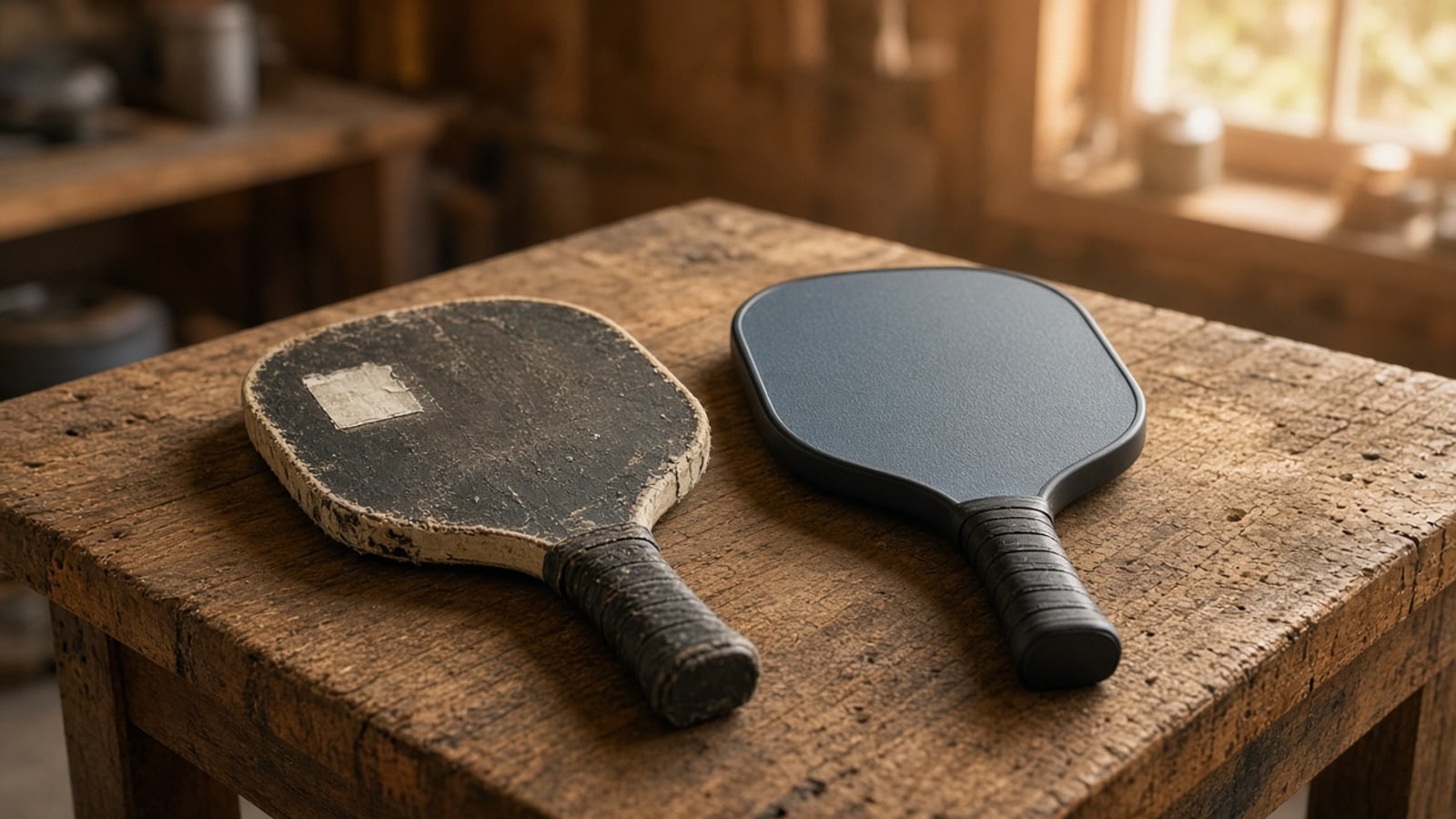
By the time I finally took it out of the bag, I had a shoulder problem, a worse net game, and a paddle I could not return because it had six weeks of court on it. That is the real cost of an upgrade that solves the wrong problem. I paid twice: once for the paddle and once for the season.
The toss was the problem the whole time
In September, I went back to my old paddle and started serving with the low toss I used in college. I had abandoned it years earlier because it felt rushed, and I had never gone back to it because a slow, high toss feels more graceful at 6:45 in the morning.
The low toss fixed almost everything. The shoulder stopped reaching. The serve got a little flatter and a lot more consistent. I could hit a serve at the body when I wanted to and a serve to the backhand when I wanted to, which was never a paddle problem. It was a toss problem wearing a paddle costume.
That is the pattern I see at the store, and I see it every week. A customer brings in a machine that is not working and wants the part that failed. Usually the part did fail, but usually it failed because of something upstream. In pickleball, the upstream thing is almost always the swing or the setup. A new paddle is a very good way to make a technique problem feel different for two weeks.
Kevin Tran wrote a column for this magazine about footwork, and his explanation of why a fast paddle does not fix slow hands is the clearest version of this I have read. If your hands are late at the net, his footwork column is where to start. The answer is the split step, not the swing weight.
The three checks I run before I buy anything now
I do not trust myself in a demo, so I use a list. It is not a long list, and it works for paddles, shoes, and bags.
First, name the fault. Not "I want more power." A fault is specific. "My serve is short and my toss is high." "My third shot floats." "My elbow hurts after two games." If I cannot name the fault in one sentence, I am not solving anything. I am shopping, and shopping in a good mood is how the paddle got into my bag in the first place.
Second, test the failure mode, not the highlight. A demo day shows you the best version of a paddle: fresh legs, no pressure, ten minutes. What I should have done is hit fifty overheads and then see how the shoulder felt the next morning. I should have played a tired third game and seen if I could still get the paddle through the ball. The failure mode is the information. Everything else is an advertisement.
Third, change one thing and keep the receipt, in the sense that matters. I never sell or give away the old paddle until the new one has at least a month on it. The old paddle is the control. If the new one is genuinely better, I will know. If my shoulder starts talking, I have something to go back to while I figure it out.
That last check would have saved my summer. I had the old paddle in a closet, not in the bag, and by the time I needed it I had already built six weeks of bad habits around a heavier frame.
What actually earned its place
Not everything I bought was a mistake. The cheap things worked, which is usually the case.
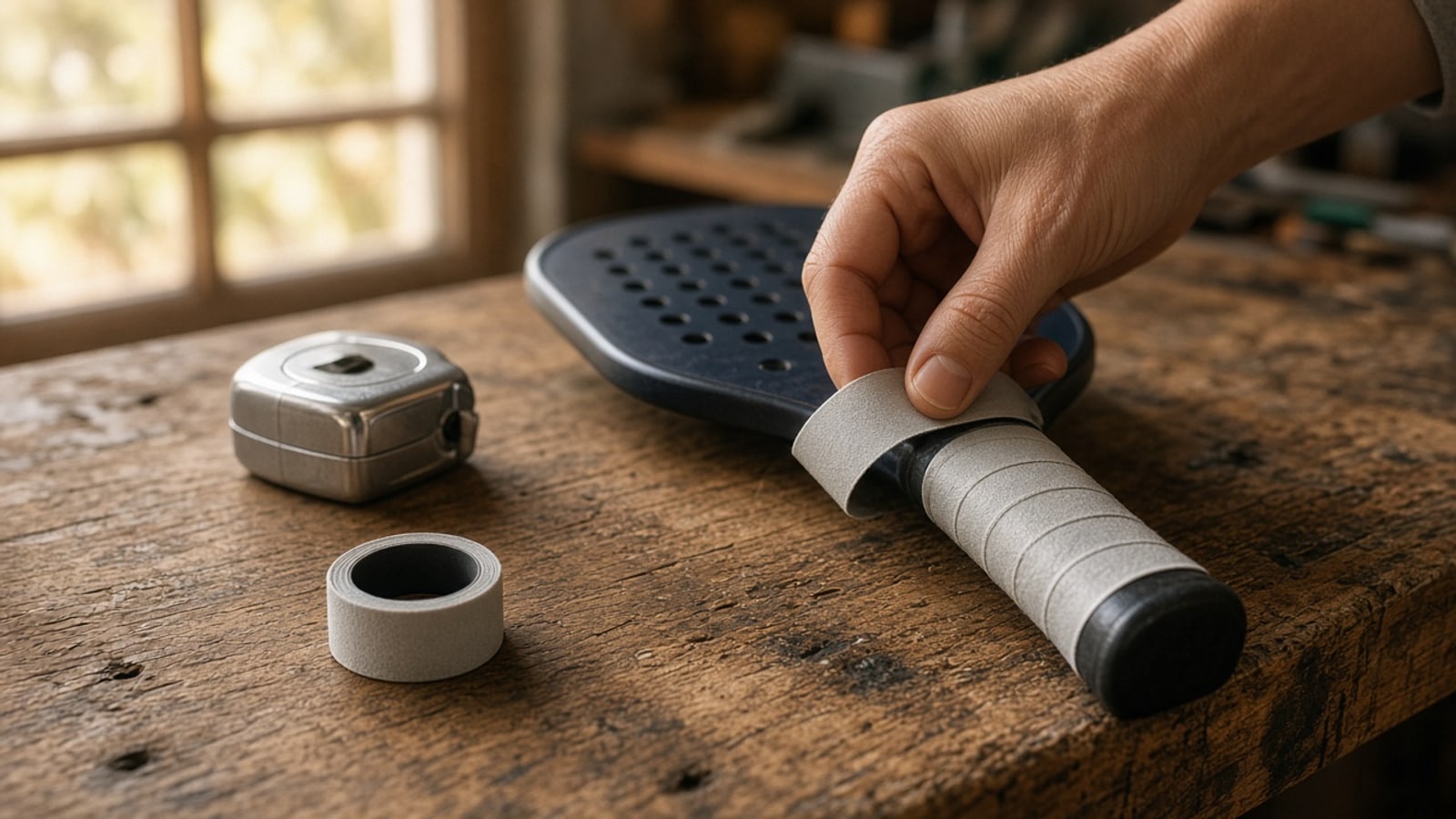
The best change I made all year was a fresh overgrip, replaced on a schedule instead of when it got slippery. A worn grip costs you a little control on every single shot, and a fresh one costs almost nothing. Grace Okafor made this point better than I can in her one-minute grip test. The grip is the cheapest part of the paddle and the only part your hand touches.
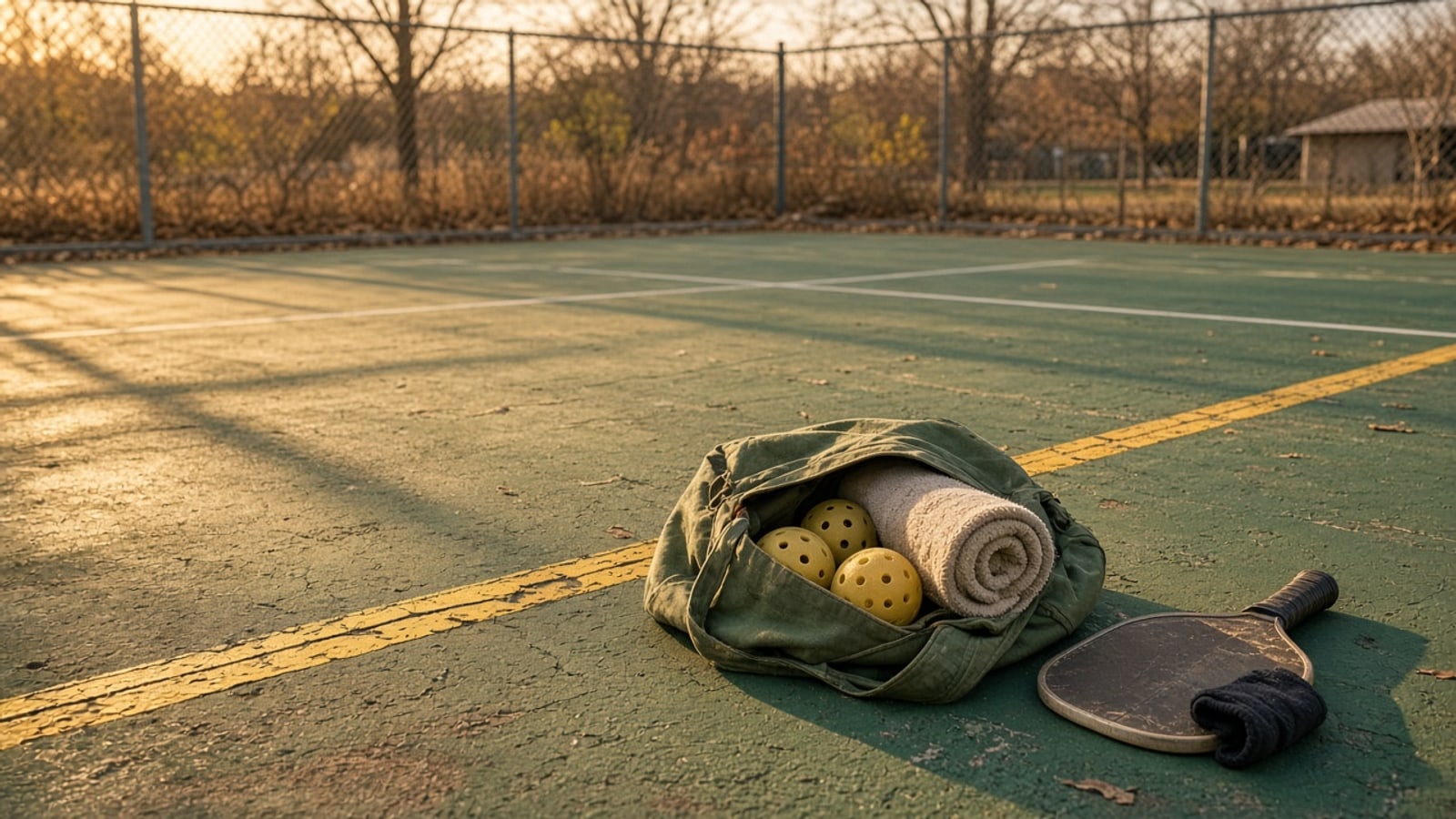
The second was a bag with two pockets, one for balls and one for the paddle, so the paddle stopped rattling against a full water bottle on the way to the car. That is not a performance upgrade. It is a way to stop damaging the thing I already own.
The third was the notebook. I have kept a spiral pad in my bag since 2019. After every session I write down what failed: my third shot, my toss, the shoulder, the feet. I have never once written down "I need a new paddle." I have written down "my shoulder hurts when I serve high" and then ignored it because the parking lot was fun.
The paddle I bought is on a shelf in the store now, used as a demo for customers who want to feel the difference a heavy frame makes. I tell them to hit ten overheads with it before they decide. Most of them put it down and go back to what they were using, and I feel a small amount of vindication, and a larger amount of embarrassment.
If you are going to buy something this month, buy a lesson. If that is not available, buy an overgrip and play two more weeks with the paddle you own. The upgrade will still be there when you have named the fault.