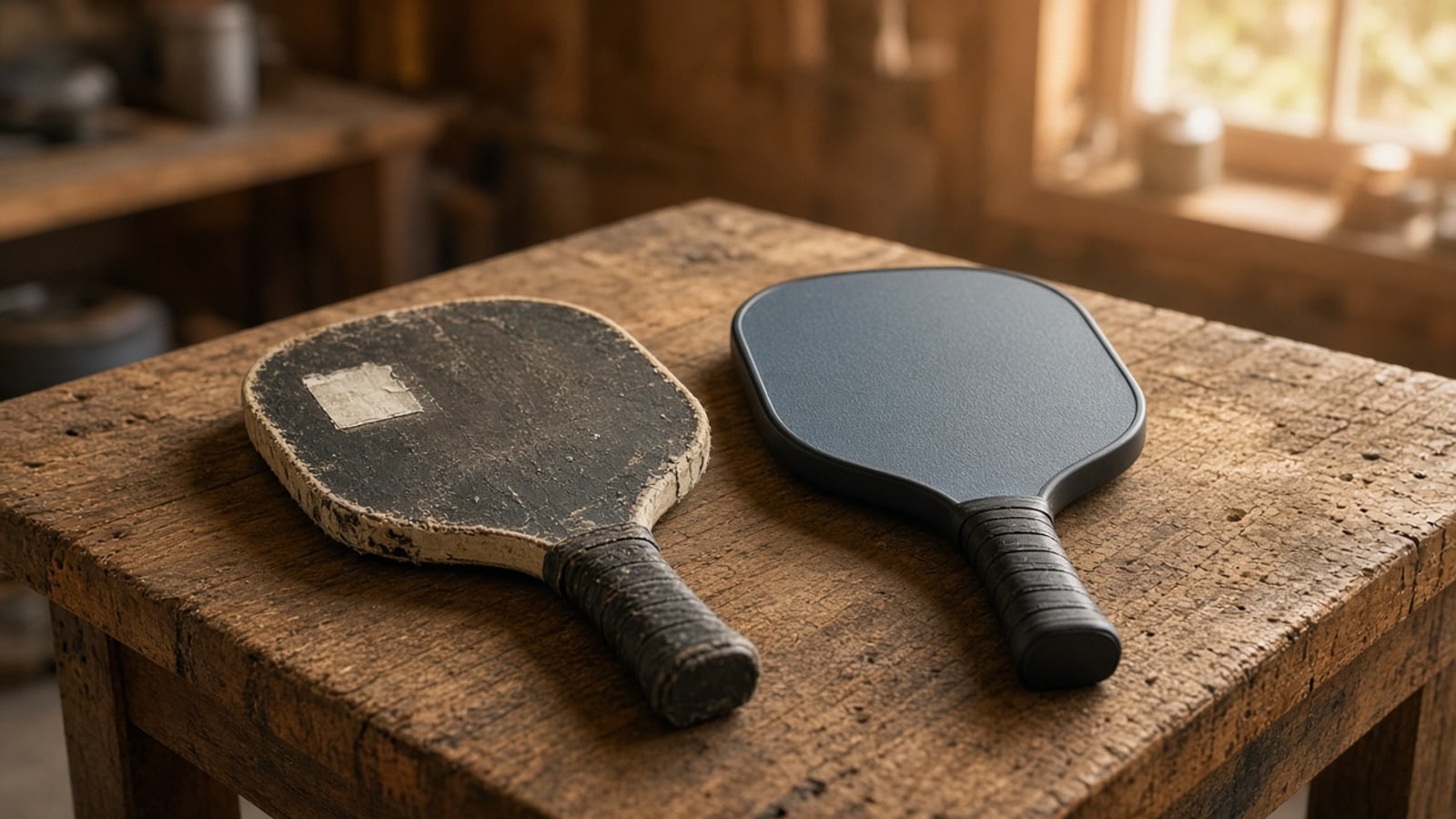
My right thumb started aching in the spring of my second season, and I did what most people do. I blamed the paddle. I read about control paddles, thicker cores, and honeycomb faces, and I almost spent a hundred and forty dollars on a new one. Then a friend handed me a roll of overgrip and said the least expensive sentence in pickleball: try this first. My thumb stopped hurting in a week. The paddle was fine. The grip was too small.
Grip size is the cheapest fix in the sport and the one most players skip. The test takes a minute, the fix costs about twelve dollars, and it tells you more about your hand pain than any paddle review you will read.
The one-minute measurement
Hold your hand flat, palm up. Measure from the crease in the middle of your palm to the tip of your ring finger. That is your starting grip size in inches.
Most recreational players I play with are between 4.0 and 4.5 inches. The paddles sold at big-box stores are often 4.25 or 4.5. If your measurement lands between them, the choice is a tradeoff, not a rule. A larger grip gives you stability and reduces the squeeze. A smaller grip gives you hand speed at the net. For a player whose thumb or forearm aches after a session, I would start larger.
That is the whole test. It is not a fitting, and it is not a guarantee. It is a starting point that is better than guessing.
Why the wrong grip hurts
A grip that is too small makes you work to keep the paddle from twisting. That work is a squeeze, and a squeeze held for two hours shows up in the thumb, the forearm, and sometimes the elbow. It is not an injury in the dramatic sense. It is a small, repetitive strain that you notice the next morning when you pick up a coffee cup.
A grip that is too large has the opposite problem. You cannot wrap your fingers comfortably, so you hold the paddle with the meat of your hand and lose feel. Hand changes at the net get slower. If you play a fast game, that matters.
The point is not that one size is correct. The point is that you should know which problem you are solving before you spend money.
The twelve-dollar experiment
Here is what I would do if I were starting over, and what I now tell every player who asks me about a new paddle.
- Measure your hand and write the number down.
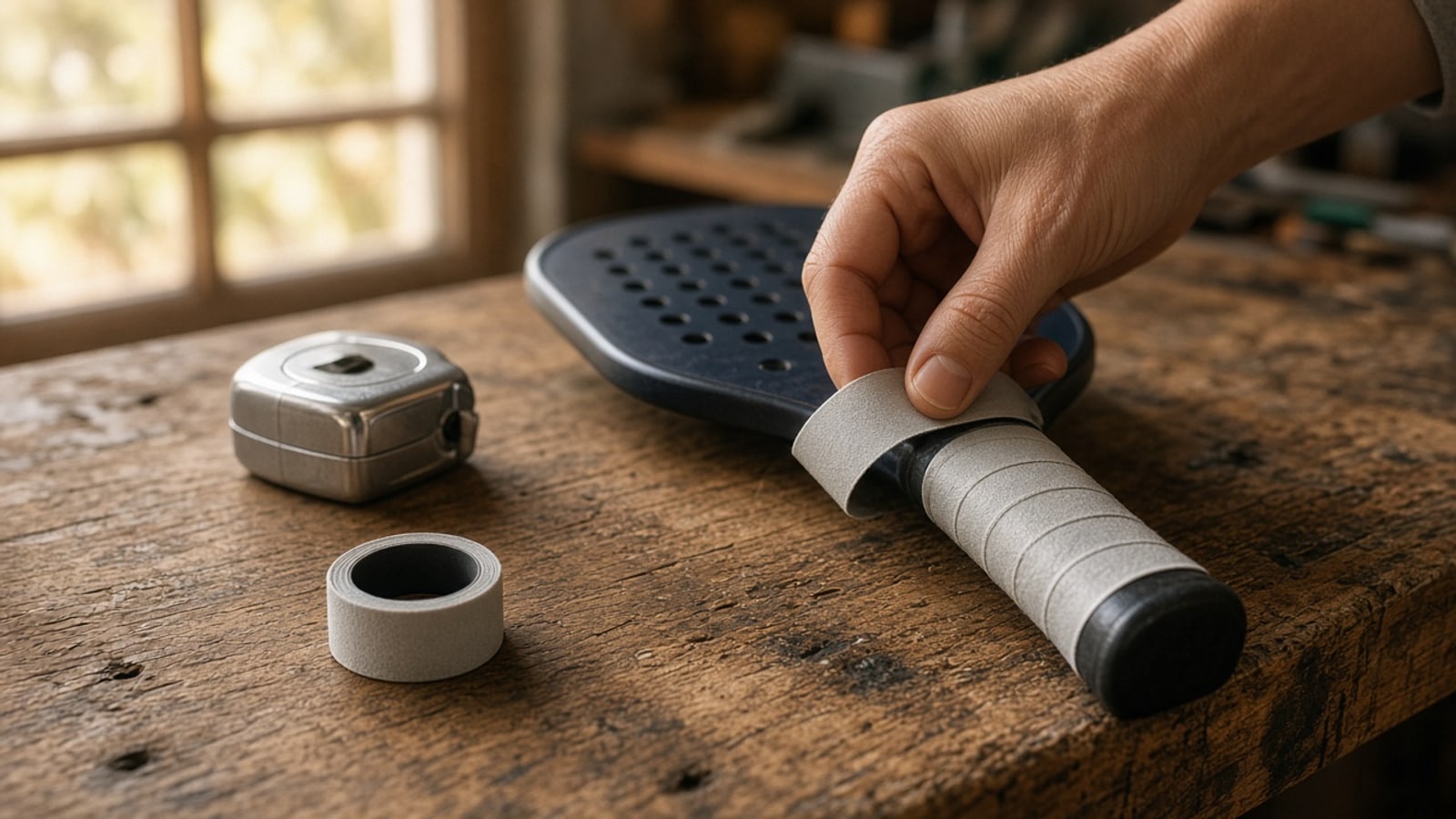
- Put an overgrip on your current paddle. If your grip feels too small, add one layer. If it feels too large, remove the original grip and use only the overgrip.
- Play two sessions. Not one. Two.
- Pay attention to the day after, not just the game. The thumb tells you more at breakfast than it does at the net.
- Only then decide whether the paddle is the problem.
I have done this three times now, and twice the answer was the grip. The third time the answer was the paddle, but by then I had earned the purchase.
The hundred-session rule
I have a rule about paddles: a hundred sessions before a new one. I wrote it down after my first year because I realized I was shopping for a solution every time I had a bad month. The rule forces me to practice instead.
The rule has an exception. If the paddle is physically wrong for you, a hundred sessions will not fix it. A 4.5-ounce paddle with a 4.5-inch grip is wrong for my hand, and no amount of practice changes that. The rule is about not shopping for technique.
Grip tape is different. Replace it every ten to fifteen sessions, or whenever it starts to feel slick. A slick grip makes you squeeze, and squeezing is the beginning of the thumb problem I just spent a hundred dollars trying to fix.
What grip size does not fix
I want to be honest about the limits of a twelve-dollar experiment. A grip will not fix a swing that hits the ball late. It will not fix a paddle that is too heavy for your shoulder, and it will not fix the forearm pain that comes from gripping the paddle like a hammer for two hours. It changes how much work your hand has to do to hold the paddle steady, and that is a real thing, but it is not everything.
If the pain is sharp, or it wakes you up at night, or it gets worse each session instead of better, the grip is not the answer. That is a conversation with a professional, not with a hardware store. I am telling you what worked for my thumb, not what will work for a torn tendon.
What the grip does give you is a control. It is one variable you can change, measure, and afford, and the result shows up within two sessions. In a sport where most advice costs a hundred dollars and a month of practice, that is worth starting with.
What I would buy if I were starting today
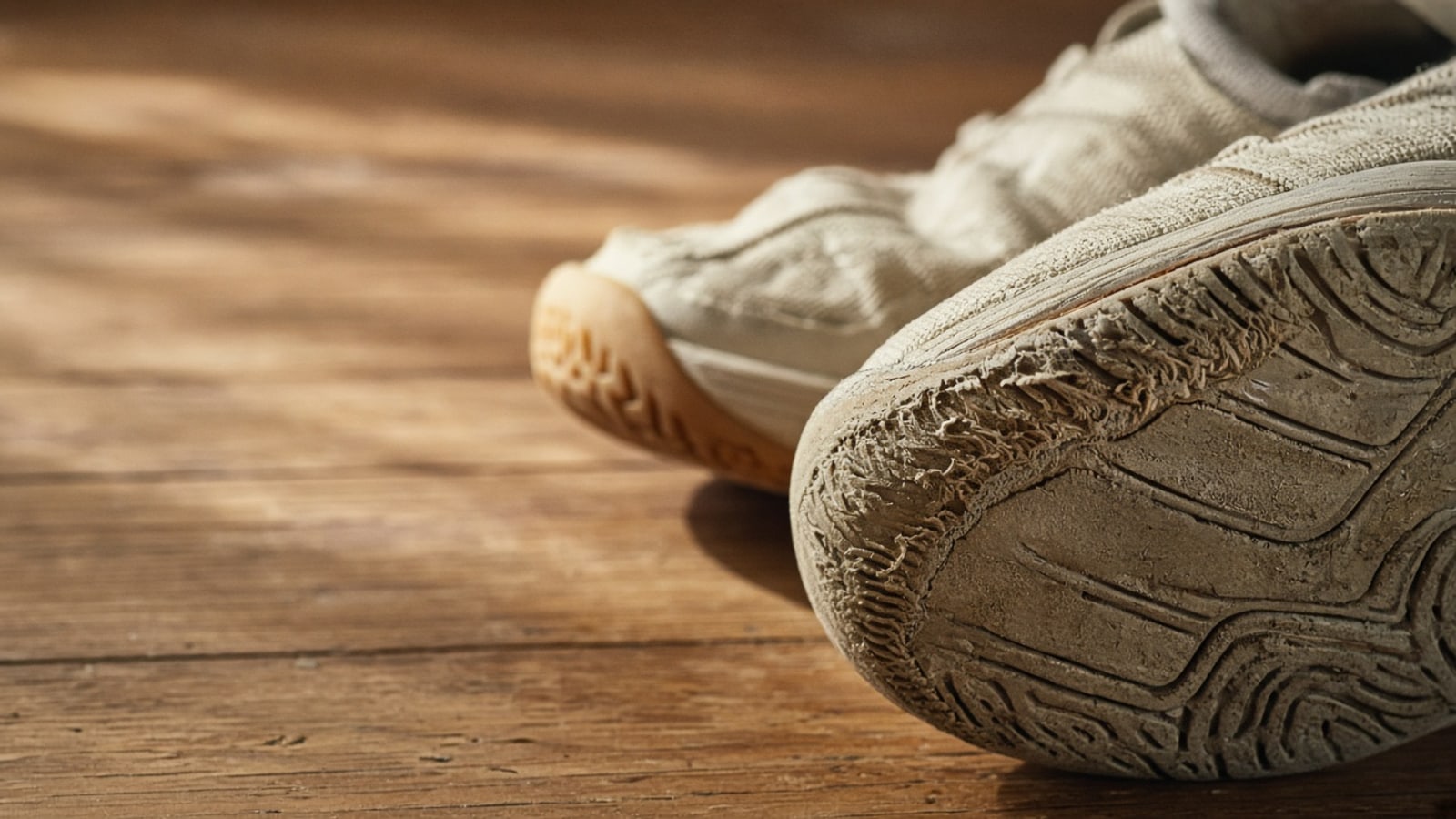
A paddle that fits your hand, a roll of overgrip, and a pair of court shoes with room in the toe box. That is the list. Not a paddle collection. If you already own a paddle you like, the overgrip is the only purchase worth making here, and it is the one most likely to change how your hand feels on Saturday morning.
If you want the technical version of the third-shot problem that a too-small grip makes worse, my friend Marcus wrote about the target issue in the third-shot drop is a target problem. And if your hand is fine but your knees are not, Tomás has the warm-up in the warm-up I do at fifty-eight.