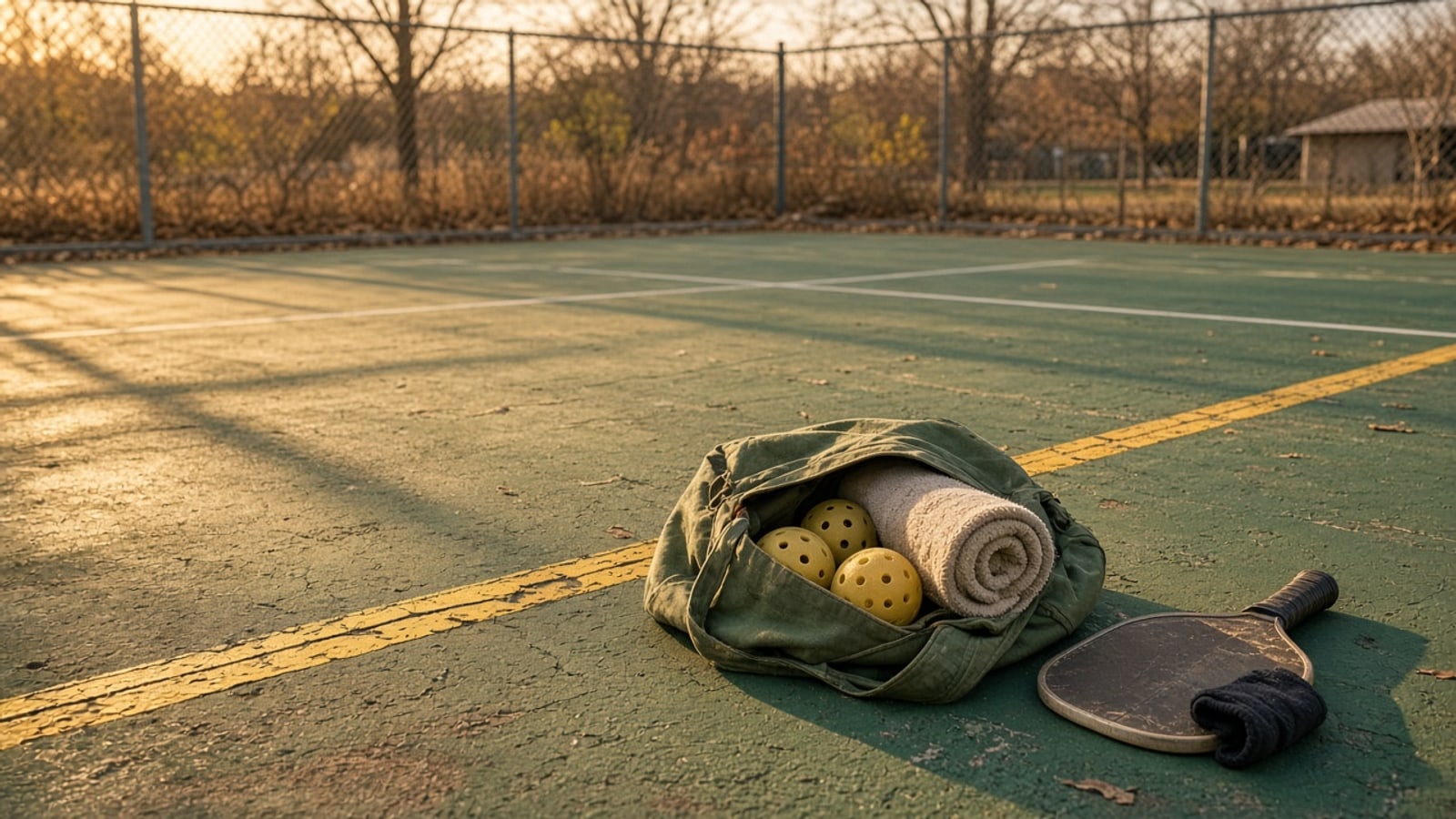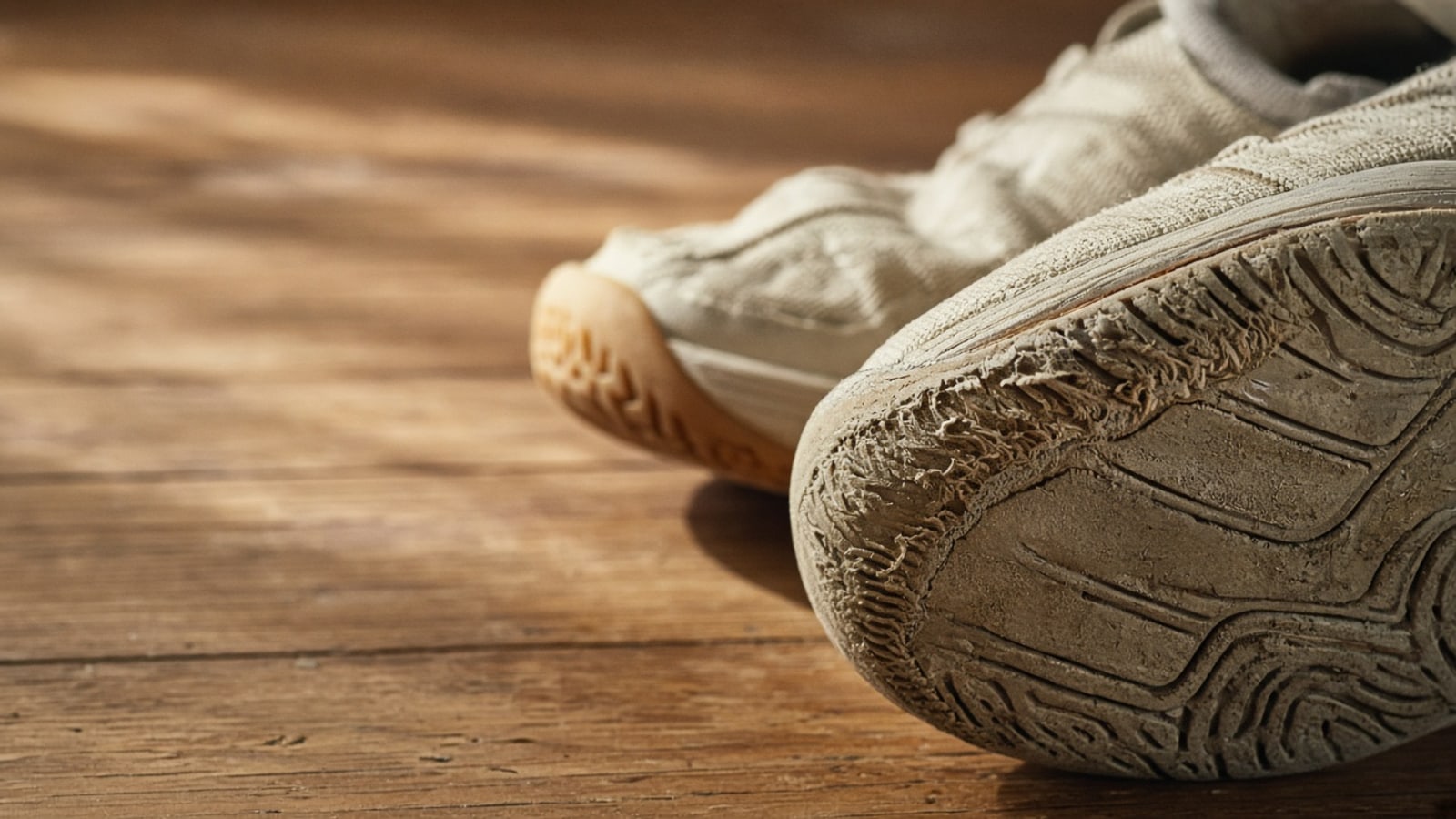
I noticed the wear on a Sunday morning in Decatur, lacing up at 7:40 for the outdoor group, when I felt the ball of my right foot drop through a hole in the insole. The bottom of the shoe still looked fine. The tread was visible. A year old is the calendar replacement point, so I did not think much of it until I looked at the inside edge and found the fabric worn through to the foam.
I bought court shoes twice a year for the first two years, using the calendar as the trigger. That is a bad system. It replaced shoes with life left and kept shoes that were worn out where it matters. So I use three checks now instead of a season.
This is a buying piece, not a medical one. I am a hospital administrator, not a clinician, and what follows is what I look for after four years of playing three times a week.
The part of the shoe that fails first
Look at the inside edge of the shoe, near the ball of the foot and the base of the big toe. That is where a pickleball player pivots, pushes off, and drags. On my shoes, the bottom tread still looks like a shoe, and the inside edge is a hole.
There is a reason for this. Most of the force in this game goes sideways and diagonally, not straight ahead. A shoe's outsole is built to survive forward wear, and it does that pretty well. The upper and the inside edge take a different kind of beating, and nothing on the outside of the shoe tells you it is happening until your foot starts to feel the ground.
My rule now: check the inside edge every two months, and replace the shoe when I can see through the fabric or feel the foam underneath. That usually happens before the tread is gone, and it is the real signal.
Why a running shoe is the wrong tool
I ran before I played pickleball, and I tried to save money by playing in my running shoes for the first six months. It was a false economy, and here is the difference in plain terms.
A running shoe is designed for forward motion. It has a soft, cushioned heel that is built to absorb impact from a stride, and the sole is shaped to roll you forward. A pickleball shoe is designed for lateral movement. It sits lower, it has a wider base, and it is built to keep the foot from rolling over the outside edge when you push off sideways. That last part is the one that matters.
I am not going to tell you a running shoe caused an injury. I never had a dramatic moment. What I did have was a general ache in the front of my foot and a knee that felt tired after Sunday mornings, and both of those went away after I switched to a proper court shoe. That is one person's experience, and I changed more than one thing, so I hold it loosely. The mechanical argument, though, is straightforward. If the game asks you to move sideways, buy a shoe that is built for sideways.
Kevin Tran's footwork column is about the first step and the split step, and one reason I finally listened to it is that he keeps saying the shoe is part of the footwork. The link between the two is in footwork for players who hate footwork. If you take away the lateral support and ask the foot to do the work, the foot loses.
The three checks I run
First, the tread at the pivot points. Not the heel, not the toe. Turn the shoe over and look at the two spots under the ball of the foot, where you turn. If the pattern is gone and the surface is smooth, the grip is gone even if the shoe looks fine.
Second, the midsole. Press your thumb into the foam at the heel and the forefoot. It should push back. If it stays compressed and does not spring back, the cushioning is done. That check catches the shoe that looks new and feels dead, and it is why I stopped trusting the calendar.
Third, the upper and the heel counter. Pinch the heel of the shoe and see whether it holds its shape. Try to push the shoe over sideways while holding the heel. It should resist. If it folds like a sock, the support is gone. Also check the inside where your foot sits, because that is where my shoes actually fail.
Three checks, about two minutes. I do them when I clean the outsoles, which I do every few weeks with a damp cloth, because a clean sole grips better on a dusty outdoor court.
The two-pair rule
The single best change I made was buying two pairs and rotating them. I keep one pair for indoors at the church gym and one for the outdoor courts in Decatur, and I let each pair dry out for a day between sessions. Two pairs last longer than two pairs bought one after the other, because the midsole foam and the upper both recover when they are not being crushed every day.
I also replace the insoles once in the life of a shoe. The insole is the part that touches the foot, and it flattens before the shoe does. A replacement insole is a small purchase that adds months of comfort to a shoe that is otherwise fine. That is the same logic as measuring your grip before you buy another paddle. Spend on the fit, not the frame.
What I will not buy again
The sale shoe in the wrong width. I have done this twice, because the price was good and I told myself the shoe would stretch. Court shoes do not stretch in the width. They stretch where your foot pushes against them, which is how you get a hot spot.
The shoe that is too small in the toe box. Pickleball involves a lot of stopping, and your toes slide forward when you stop. If the toe box is tight, you will know about it in the third game. Try shoes late in the day, with the socks you play in, and walk a hard side step in the store. If the store will not let you do that, go to a store that will.
And the premium shoe bought for the label. I have owned one pair of expensive court shoes and one pair of moderate ones, and the moderate pair fit my foot better. Price is not a fit.
The shoe question is less fun than the paddle question, and it matters more. You can play decent pickleball with a paddle you do not love. You cannot play it comfortably in a shoe that is worn out on the inside edge. Check the edge, press the foam, and rotate two pairs. That is the whole system, and it has kept me on the court four years without a foot problem I can point to.