The rec center parking lot in Green Valley is the color of a paper bag at seven in the morning, and on Tuesdays I am usually the third car in it. The first car belongs to a man named Herb, who arrives at 7:05 to open the equipment closet and set out the nets, and the second belongs to a woman named Caroline, who walks two laps around the courts before she picks up a paddle. I arrive at 7:10 because I have been arriving at 7:10 for four years, and because the eight-minute warm-up I do is a superstition I am not willing to test.
The game starts at 7:30. The morning starts at 7:10. I have come to believe that the twenty minutes in between are the actual club, and that the pickleball is what the group does afterward to justify standing around in a parking lot.
What the twenty minutes is for
I am a retired history teacher, and I have spent a fair amount of my life reading sign-up sheets and minutes and attendance records. What I have learned is that the official document is never the real story. The real story is in the parking lot.
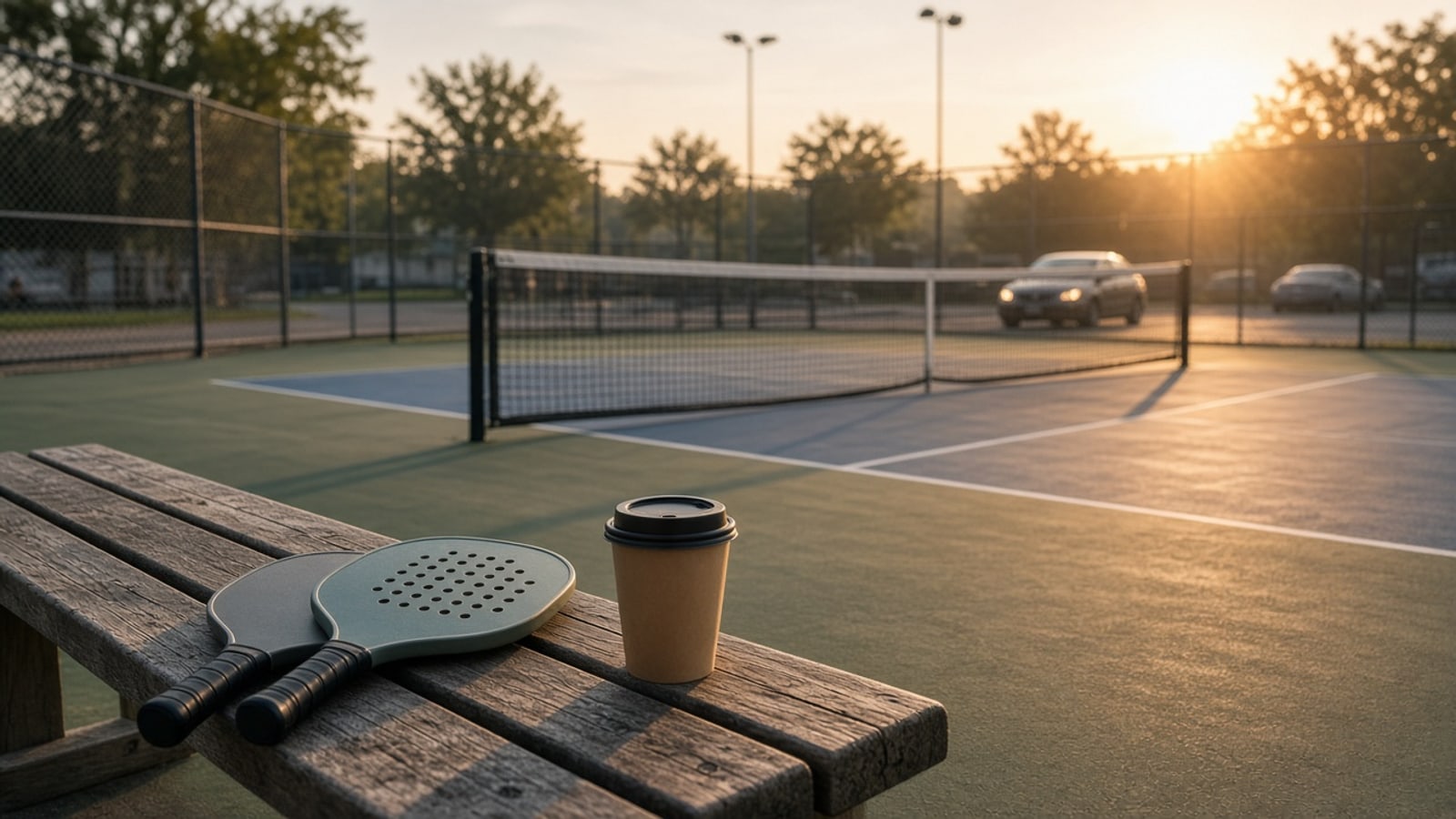
At 7:10 the conversation is not about pickleball. It is about a grandson's baseball game, the price of a new roof, a neighbor who is not doing well, and the fact that the water fountain has been running warm since August. Caroline brings a thermos of coffee and a stack of paper cups, and if you arrive before 7:20 you get a cup. If you arrive after, you get a cup anyway, but you have to ask, and asking is a small thing you should not have to do.
There is also the business of the nets and the chairs. Herb opens the closet and sets up, and I help, and by 7:20 the courts look like a place where a game is going to happen. Nobody assigns this work. It is the membership fee, and it is paid in labor and in the ten minutes of gossip that make the labor pleasant.
The 7:29 arrivals
There are people who arrive at 7:29, and I do not look down on them, though I do keep a private ledger.
The 7:29 arrivals are usually very good players. They park, they walk out with a paddle already in hand, they hit the first serve at 7:30 and 15 seconds, and they do not know that the water fountain is running warm. They are not unfriendly. They are efficient, and efficiency has a cost, and the cost is that they are guests at a party they did not help set up.
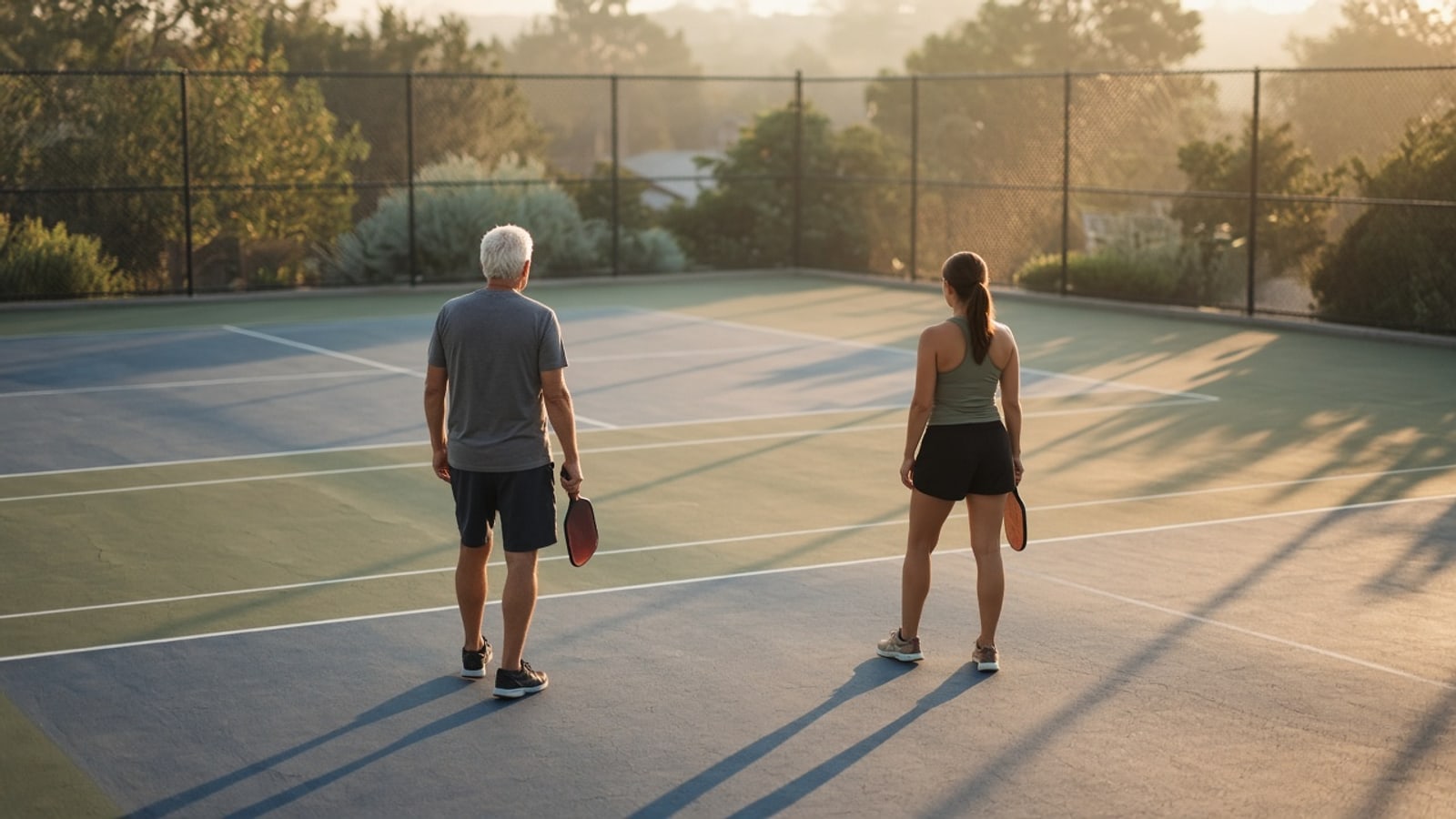
Then there are the 7:20 people, who arrive after the nets but before the first ball, and who are my favorite category because they are trying. They are new, or they are coming back after a knee, or they are the spouse of a regular and have not yet decided whether this is their thing. They hover near the bench. They do not know where to put their bag. I give them a court and a partner and a cup of coffee, in that order, and by the following week they are 7:10 people if the group is any good.
A club is not made of the 7:29 people. It is made of the 7:10 people. The 7:29 people are welcome, and some of them pay the fee later in other ways, but the club cannot survive on them.
The dog at the fence
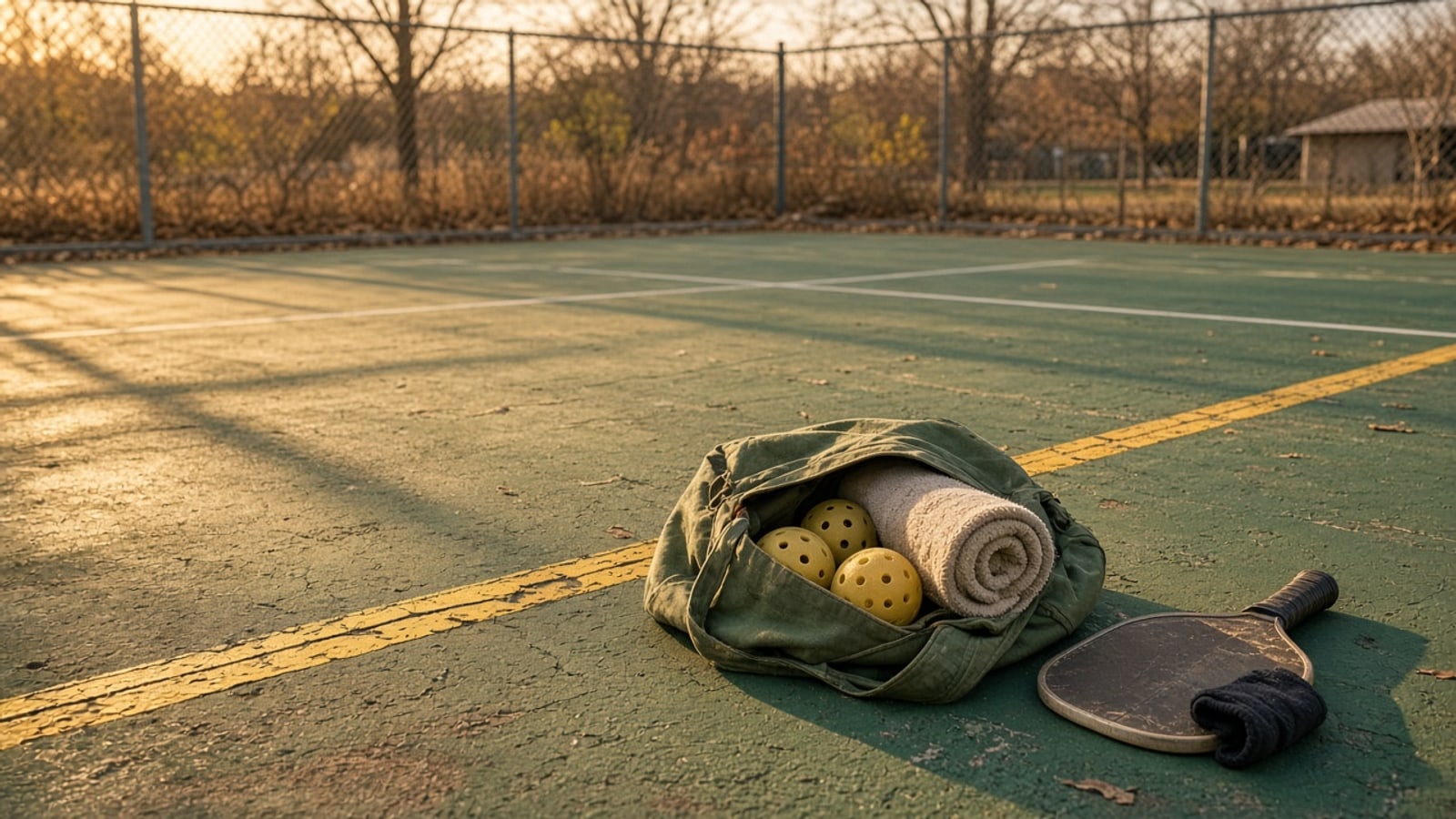
Marlene does not play, which means she does not come to the courts, which means the dog situation is entirely mine to manage. There is a woman who walks a golden retriever past the courts every Tuesday at about 7:35, and the dog has learned that the fence on court three is where the treats are. I keep a pocket of dog treats in my bag, which is a sentence I never expected to write about pickleball, and the dog now arrives at 7:35 with the confidence of a member.
This is the kind of thing I would have found ridiculous five years ago. A retired history teacher standing at a chain-link fence feeding a dog while eight people play doubles behind him. But the dog is part of the schedule now. If the dog is late, people notice. If the dog does not come, someone asks. That is what a neighborhood is, and I have started to think a pickleball court is one of the few places left where a neighborhood can still form by accident.
The sentence I refuse to say
My mother had a rule about thank-you notes, which was that you should only send one if you meant it. I have applied the same rule to a phrase you will hear at every court in this country.
I do not say good game as a reflex. I say it when the game was good. If it was not good, I say thank you and I mean that too, because the other people showed up and the courts were there and the weather was decent.
This makes me a small heretic. People expect the phrase, and when you do not deliver it, they sometimes think something is wrong. But I have been on the other side of a reflex good game, and it feels like a coin. It is the same coin every time and it is not worth much. I would rather hear nothing, or hear the truth, which at 7:35 in the morning usually sounds like a plain admission that the third game got away.
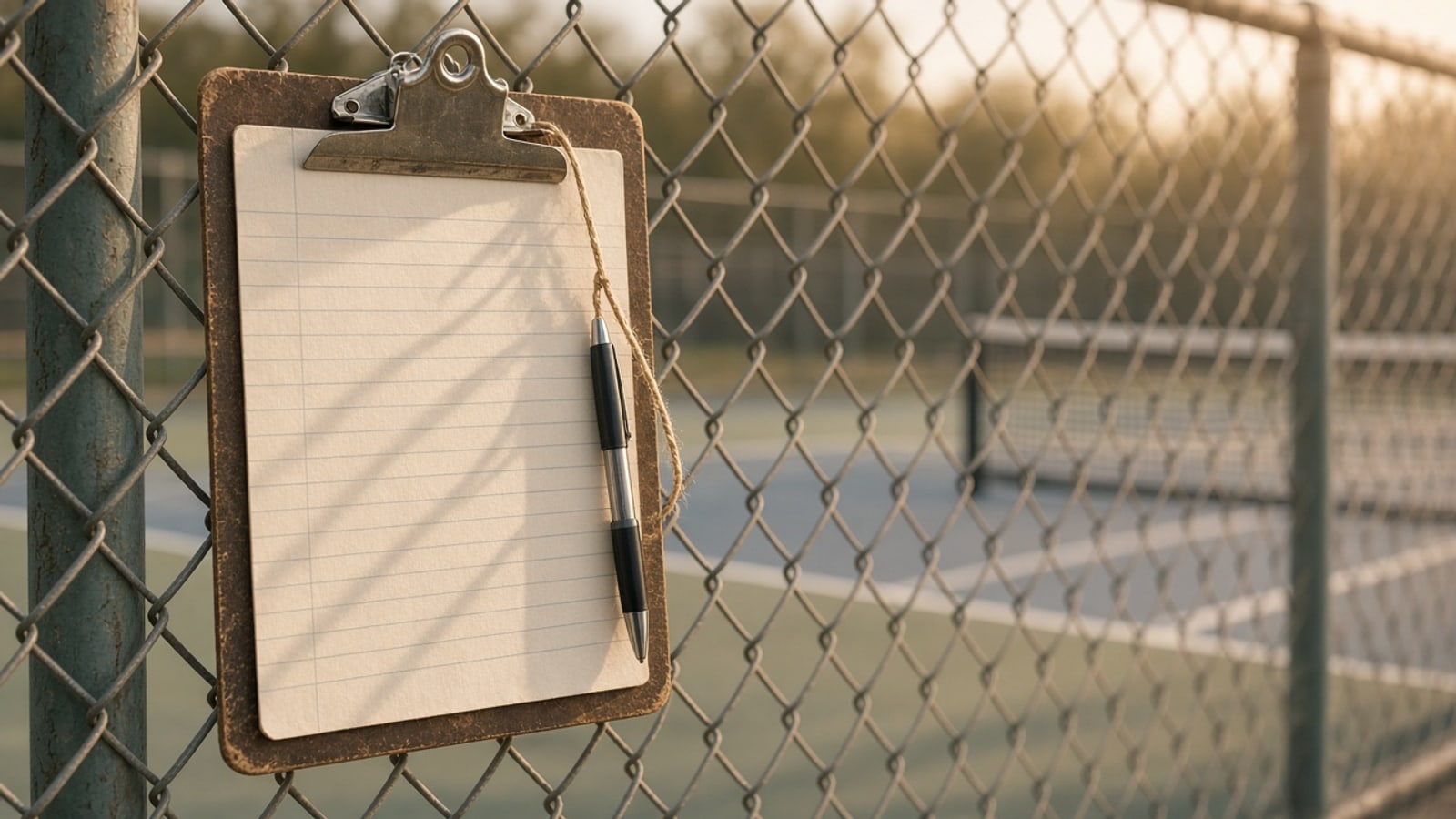
The club has a sign-up sheet, and it is a better document than most constitutions, as I have argued in the sign-up sheet is the real club constitution. But the sheet only works because the 7:10 people show up to enforce it and the 7:20 people learn the rules and the 7:29 people accept the rotation. Dottie Frasier has written about the social mechanics of that in how to run open play without a clique, and she is right that fairness has to be visible. Fairness also has to be unloaded from a closet at 7:05 by a man named Herb.
The game starts at 7:30. If you want to join a group, do not arrive at 7:30. Arrive at 7:10, bring a cup for the coffee, help with the nets, and do not say good game unless you mean it. The pickleball will take care of itself.